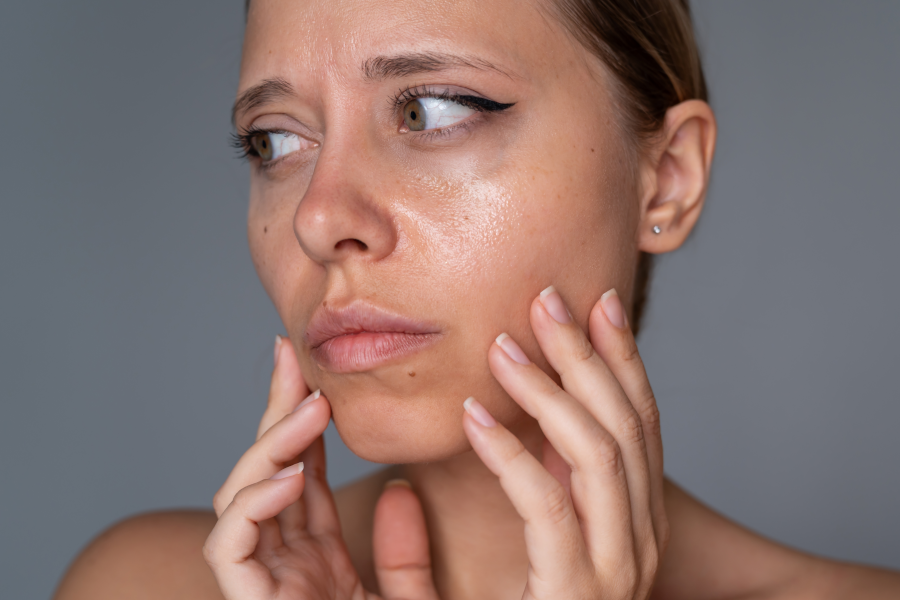

You put on foundation, blush, eyeshadows, and in a matter of hours, everything is ruined completely because those sebaceous glands decided it’s time to rain oil all over that face. Well, we all have been there. Even if a product promises it will do better, with countless “Suited for oily skin” labels. But in the end, they all end up the same way.
But today is different. StyleSpeak has done the grunt work for you so you don’t have to try your luck each time a product fails miserably. And these makeup suggestions aren’t just for beauty stars who want a normal, crease-free day. But also for salon pros who want to suggest a trusted routine to their client that’ll finally fix their oily dilemma for good. So without any further ado, let’s begin the show!
The Chemistry Behind Oily Skin & Makeup Slippage

All skin secretes natural oil to keep the outer barrier protected from foreign elements. And as with everything in the world, this also differs drastically from one person to another. Skins with higher oil secretion are awarded the term “oily,” while lower ones are called “dry”.
That excess oil, or sebum, does provide more aggressive protection from dirt and bacteria, and helps trap moisture for oily skin. But it also, unfortunately, reacts proactively with the cosmetic products applied on top of it.
And just like the fundamental rule of chemistry says, “like dissolves like.” So when the oily and waxy sebum comes in contact with the oils and wax substances of makeup, it starts to dissolve them. And as a result, the pigments that hold onto these oily layers start to float around and cause blockage all over the face.
Think of it like a makeup remover, but one that is exceptionally good at it and always works overtime. And that’s the exact reason why most makeup doesn’t last even half a day on an oily skin. It’s even worse in summer when sweat mixes with sebum and spreads everywhere.
Anyways, that’s enough talking about oily skin. Now let’s see which makeup you can stockpile to remove negative reviews from the picture and turn them into positive five-star ones.
Makeup Formulas That Last All Day
Stage 1: Primer

Primer acts as the base coat before any makeup is applied. And if the base coat is wrong, the entire makeup routine starts to fall apart. So make sure that your primer doesn’t have heavy, greasy linear silicones and nourishing oils. These are naturally slippery, so if a foundation is applied, it may slide right off the skin.
Instead look for either oil absorbing silica primers if a silicone foundation is planned next, or oil-free mattifying primers with silica, niacinamide, or clay. These soak up oil in the T-zone and keep it clean while the other makeup layers work in harmony to control the sebum even more.
Stage 2: Foundation
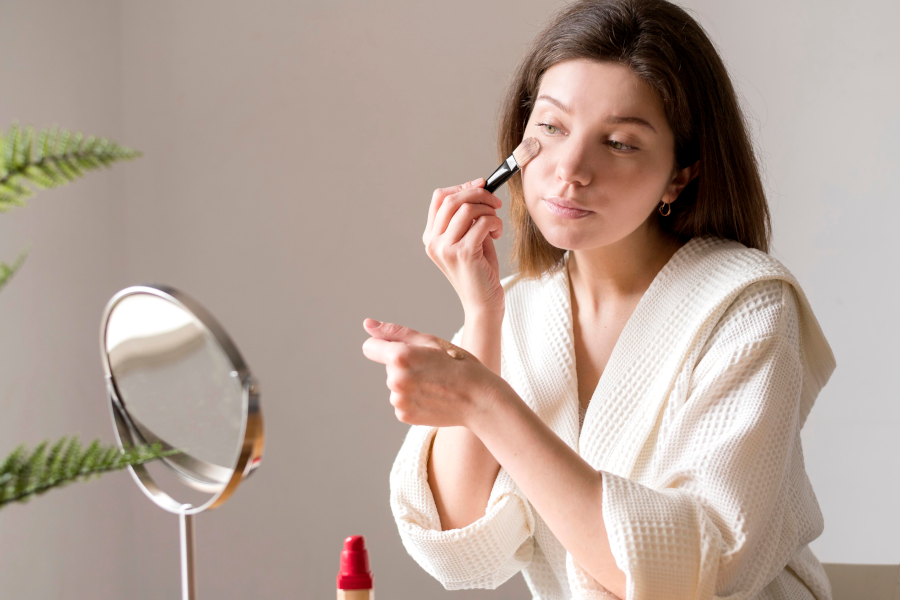
If oil mixes with oil, then why not remove oil from the equation? While it alone won’t solve the problem. But it’s a good starting point. So instead of buying traditional oil-based foundations, you can go for either of these two:
Option A: Loose mineral powder foundations:
These dusty foundations use silica, kaolin clay, or mica and pair it up with mineral pigments like iron oxides and titanium dioxide. So without any liquid binders, these powders act as a sponge for the skin and actively absorb the sebum as it starts to come out of pores.
Option B: Soft-matte liquid foundations:
These have a complex formula that uses volatile silicones like Cyclopentasiloxane or hydrocarbons like Isododecane and pairs them up with Trimethylsiloxysilicate, which is a type of film-former. These aren’t oils, so they are sebum-resistant by default. All while the liquid or gelly formula evaporates in just 60 seconds and locks in the pigments with an oil-resisting mesh. And since it’s light, it also feels much breathable on the skin.
Stage 3: Blush

Checks are the hotspots of pores, so the traditional dewy blushes with coconut oil, shea butter, or waxes won’t last long before it’s melted to smothering. So the goal is to also remove them from the equation and replace them with,
Option A: Water-based or gel cheek tints
These retain their liquid form for a limited time, just like a liquid foundation. And when it evaporates, only the water-soluble dyes are left behind. Sebum can pass through these dyes without reacting with them.
Option B: Blush sandwiching
For maximum wear, you can also mix the liquid stain with a matte powder blush.
- First, apply a light liquid stain on the cheeks and let it evaporate properly.
- Then take a finely milled baked powder blush and lightly dust it on top.
Clients who don’t feel happy enough after a simple stain usually need this. It gives you more freedom on how the blush should look while meeting every demand of the customer.
Stage 4: Lipstick

While lips don’t have the necessary glands to produce sebum, they can still feel greasy when a traditional creamy lipstick breaks down due to talking or eating. So look for Water-based lip stains or gloss-to-stain hybrids that stick directly to the skin instead of transferring all over the place. The glossy layer will evaporate or mix with the upper layer, but the underlying dye that provides the real tint stays strong until it fades away.
Stage 5: Eyeshadows

Unlike lips, eyelids do have sebaceous glands. So for eyeshadows, look for waterproof cream-to-powder shadow sticks or Volatile liquid eyeshadows. These give around half a minute of playtime before drying down completely and leaving behind a smudge-proof, crease-resistant film.
Conclusion
Surviving a day without drowning in oil is possible as long as the tools are right. And thanks to the modern internet, finding those tools isn’t that difficult. Just look out for the HERO ingredients mentioned in this article, and once they are in the picture, nothing will stop you or your client from enjoying her day to the fullest.