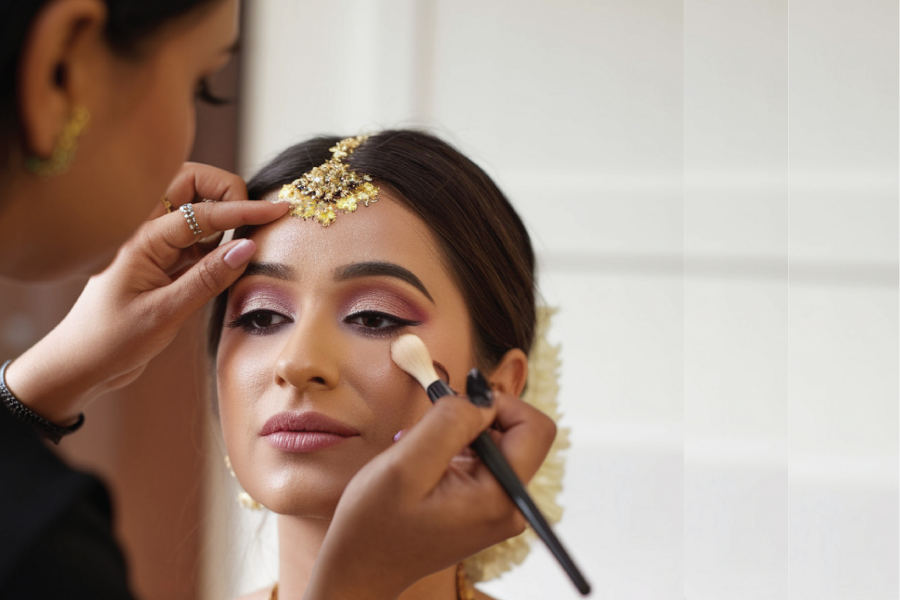


India’s summers are not gentle. Anyone who sat through a Mumbai afternoon in May or stepped onto a Delhi road in June knows what the heat does. Makeup melts. It slides. By noon it has migrated somewhere it was never supposed to go. So when summer makeup trends tilt toward lightweight, dewy, heat-proof formulations, that is not some global aesthetic movement. For makeup artists working in India, it is just common sense.
The 2026 season has made one thing clear: less product, better result.
The Skin-First Philosophy Is Running This Season
The biggest change in summer makeup trends this year has nothing to do with colour. It is about what the skin looks like underneath. Clients want hydrated, not heavy. Glassy, not greasy. That “I woke up like this but better” thing.
Makeup artists are rethinking base routines from scratch. Heavy foundations are out. What is working right now:
- Skin tints and serum foundations with SPF, applied over a properly moisturised base
- Water-based primers that grip without suffocating the skin in 38-degree heat
- Tinted moisturisers with concealer only where it is actually needed, not everywhere
- Powder blush and bronzer, used sparingly, enough warmth, no extra weight
The logic is not complicated. In summer, product needs to move with your skin, not sit on it. When a face sweats under a heavy foundation, it cakes. A skin tint just looks like a warm complexion. That is the whole idea.
Eyes and Lips: Where the Colour Lives
Graphic liner is back. And it is holding up.
Bold clean lines. Geometric shapes at the outer corner. Floating liner. This is one of the more persistent summer makeup trends this season and the formula shift behind it is what made it practical. Gel pencils and felt-tip liners in waterproof formulations are outperforming traditional liquids in humidity. They set faster, they do not bleed, and the edge stays sharp.
For salon professionals this is also a conversation about retail. A client who loves liner but complains it smears by noon is using the wrong formula. Pointing her toward the right one is half the job.
One shade. That is the eye look.
Blending four eyeshadow colours in Indian summer heat is a bad idea and most artists have learned that the hard way. The monochromatic eye fixes it. One shade across the lid, the lower lash line, sometimes swept onto the cheekbone. Burnt terracottas, dusty peaches, warm mauves. Cream shadows that pull double duty as cheek tints are everywhere right now for exactly this reason.
Lip stains, not lipsticks.
Full-coverage lipsticks transfer, bleed into fine lines, and need constant fixing. Stains and tinted balms give colour that actually stays, some hydration for air-conditioned environments, and a finish that does not look like you tried too hard.
What Actually Makes a Look Last
The question every artist hears in summer: how do I make this hold?
Product order matters. Setting technique matters more than people think. A few things worth knowing:
- Translucent powder pressed over a damp sponge gives a smoother, longer-wearing result than buffing it on dry
- Baking looks heavy in harsh daylight. Most Indian skin types do better with a lighter hand
- Waterproof mascara and brow gel are not optional from April through July
- Oily skin does best with a mattifying primer at the T-zone and a dewy product on the higher planes, not one formula everywhere
None of this is new information. But it requires thinking about how products interact, not just how they go on.
What This Means on the Salon Floor
Clients are not just coming in for services. They want to know what to do. The summer makeup trends they see on Instagram look immaculate in a controlled studio. On a real face, in a real Indian summer, those looks need interpretation.
That interpretation is what the professional brings. Knowing which product survives humidity, which setting technique works on which skin type, how to build something that still looks right after a long day outside, that is not something anyone picks up from a five-second reel. Salons that actually train their teams on how products behave seasonally, not just how to apply them, tend to keep their clients.