
Your skin is a living, breathing ecosystem, hosting trillions of microscopic allies you’ll never see but rely on constantly. These allies form what’s known as the skin microbiome, and it acts as a genuine protective shield, essential for clear, resilient, hydrated skin.
The problem is that modern skincare often treats skin like a sterile surface that needs constant scrubbing. Harsh products “clear-cut” this microscopic forest, stripping away the very community your skin depends on. The better approach is a “support, don’t strip” mindset, using prebiotics and postbiotics to restore natural harmony instead of fighting your skin’s own biology.
Quick reference: Prebiotics feed your skin’s existing good bacteria. Probiotics are live bacteria applied directly (rarely stable in cosmetics). Postbiotics are the stable, beneficial byproducts left behind after bacterial fermentation.
What Is the Skin’s Microscopic City? An Introduction to Skin Microbiome Balance
The Incredible Numbers
The scale here is genuinely hard to picture. Roughly a trillion microorganisms live on your skin’s surface, spanning more than 1,000 different bacterial species. Each square centimeter of skin hosts around a million bacteria, and no two people share quite the same microbial makeup. Your microbiome is essentially as unique as a fingerprint.
Think of it this way: your physical skin barrier is the protective wall, and your microbiome is the living community residing on top of it. Both matter, but they’re not the same thing, and a strong wall with an unhealthy community on top still leaves you vulnerable.
Crucial Functions of a Balanced Skin Microbiome
A balanced microbiome does five distinct jobs at once:
- Pathogen protection. Beneficial microbes physically crowd out harmful pathogens that would otherwise trigger infection and acne.
- Optimal pH maintenance. Microbes produce acids that help maintain your skin’s ideal, slightly acidic pH, generally in the 4.7 to 5.5 range.
- Barrier and lipid support. They aid in producing the essential lipids and proteins that keep your physical barrier intact.
- Inflammation control. They help regulate your skin’s immune responses, preventing overreactions and chronic redness.
- Hydration regulation. They directly influence your skin’s ability to bind and retain moisture.

The Disruptors: What Throws Your Skin Microbiome Out of Balance?
Top Skincare Habits That Harass Your Microbes
Harsh cleansers. Sulfates like SLS and SLES, along with other aggressive surfactants, strip away good bacteria right alongside dirt and oil.
Over-cleansing and over-washing. Washing too frequently, or scrubbing too aggressively, prevents your microbial population from ever fully recovering between washes.
Indiscriminate antibacterial products. Daily use of facial products containing antibacterial agents like triclosan or triclocarban destroys beneficial bacteria without any selectivity.
Active ingredient overload. Piling on too many strong, harsh actives at once compounds the stress on an already taxed microbiome.
Environmental & Lifestyle Triggers
Climate plays a bigger role than most people assume. In hot, humid environments, constant high humidity can promote selective microbial overgrowth, year-round heat increases sebum production, and dry, air-conditioned indoor air causes extreme moisture fluctuations that your skin has to constantly adjust to. On top of environmental factors, chronic stress and a poor diet can alter the composition of your skin microbes from the inside out, and systemic antibiotics disrupt your body’s overall bacterial balance in ways that show up on your skin too.
Red Flags of an Unhealthy Skin Microbiome
Watch for persistent, unexplained sensitivity or reactivity to products you used to tolerate fine, chronic inflammation, redness, and irritation, or frequent, stubborn breakouts that don’t respond to your usual routine. One particularly frustrating pattern shows up often in hot, humid climates: excessive surface oiliness paired with deep underlying dehydration, essentially your skin overproducing oil in an attempt to compensate for a compromised lipid barrier.

Understanding the Biotics: Probiotics vs Prebiotics vs Postbiotics in Skincare
These three terms sound nearly identical, but they play entirely different, complementary roles.
Probiotics in Skincare (The Live Cultures)
Probiotics are live beneficial bacteria, such as Lactobacillus or Bifidobacterium strains. True probiotics are rarely used in topical cosmetics for a practical reason: live cultures are incredibly unstable in creams, difficult to preserve long-term, and face real regulatory hurdles. Instead, most “probiotic” skincare brands actually use inactive or fragmented bacterial parts rather than genuinely living cultures.
Prebiotics in Skincare (The Fertilizer)
Prebiotics are nutrient sources, mostly plant sugars and natural fibers, that act as fertilizer to feed and nourish your skin’s existing friendly microbes. Key ingredients to look for include alpha-glucan oligosaccharide, inulin, fructo-oligosaccharides (FOS), galacto-oligosaccharides (GOS), xylitol, and chicory root extract. Prebiotics excel because they’re highly stable in formulations, naturally compatible with whatever unique microbiome you already have, and frequently favored in clean skincare formulations for that same stability.
Postbiotics in Skincare (The Helpful By-Products)
Postbiotics are the highly active, beneficial byproducts and metabolic compounds left behind when friendly bacteria ferment and break down prebiotics. Look for fermented extracts, like fermented rice water or kombucha, lysates such as Lactobacillus ferment lysate, Bifida ferment lysate, or Lactococcus ferment lysate, and Saccharomyces ferment filtrate. Postbiotics deliver the direct biological benefits of bacterial fermentation, peptides, enzymes, short-chain fatty acids, without any of the stability or safety concerns that come with live bacteria.
Prebiotics vs Postbiotics: Which Is Better for Your Skin Ecosystem?
This isn’t really a competition. It’s closer to breakfast and lunch: both matter, and they serve different purposes at different points in the day.
The Core Differences & Unique Strengths
Prebiotics work indirectly, over the longer term. They nourish and rebuild a resilient microbial community from the ground up rather than delivering an instant effect.
Postbiotics work directly and immediately. They deliver near-instant soothing, barrier-strengthening, and calming effects straight to stressed or sensitive skin.
Side-by-Side Comparison
| Prebiotics | Postbiotics | |
| What they are | Non-living plant fibers and sugars | Non-living fermentation byproducts |
| Mechanism | Indirect — feeds existing bacteria | Direct — active compounds work immediately |
| Stability | Highly stable in formulations | Highly stable, no live cells to preserve |
| Primary benefit | Long-term microbial resilience | Immediate calming and barrier support |
| Best for | Building baseline microbiome health | Sensitive, reactive, or humid-climate skin |
The Power of Symbiosis
Combining both prebiotics and postbiotics in a single formula gives you a more comprehensive defense system than either ingredient could provide alone: postbiotics calm and repair right now, while prebiotics quietly build a more resilient microbiome for the weeks ahead.
The Science-Backed Benefits of Prebiotics and Postbiotics
This category is backed by real, growing clinical research, not just marketing language.
Clinical Evidence for Topical Prebiotics
A 2026 narrative review of pre-, pro-, post-, and synbiotics for skin health found that across multiple studies, prebiotic ingredients were consistently associated with increased hydration and water-retention capacity, reduced trans-epidermal water loss (TEWL), and improved barrier-related outcomes. One mechanistic study cited in the review found that a prebiotic colloidal oat ingredient increased lactic acid production by beneficial skin bacteria both in vitro and in the stratum corneum, alongside measurable increases in hydration and barrier function. Prebiotics have also shown genuine promise for acne: a 2025 clinical study of a prebiotic gel cream reduced total acne lesions by nearly 36% over six weeks by shifting the skin’s bacterial balance toward healthier strains.
Clinical Evidence for Topical Postbiotics
Postbiotics have their own distinct evidence base. Research on postbiotic-derived sphingomyelinase, an enzyme naturally produced during bacterial fermentation, shows it stimulates ceramide synthesis, enhancing barrier function and water retention. The same body of research points to postbiotics upregulating barrier-related gene expression in keratinocyte models, including pathways tied to structural barrier proteins. Beyond barrier support, postbiotics are also associated with selective antimicrobial activity, meaning they can inhibit harmful pathogens while leaving beneficial microbes largely undisturbed, along with antioxidant effects that help protect skin cells against free radical damage from pollution and other environmental stress.
Why Your Facial Cleanser Is the Ultimate Microbiome Maker-or-Breaker
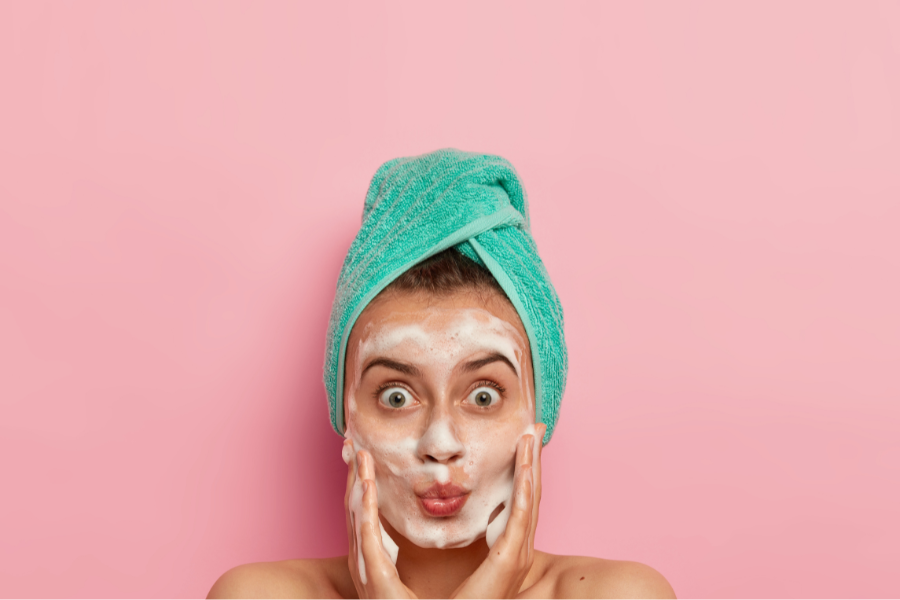
Here’s an uncomfortable truth: the most disruptive step in most skincare routines is the cleansing step itself. Traditional cleansers clear-cut the microbial forest twice a day, every day, leaving skin chronically more vulnerable than it needs to be.
Anatomy of a Truly Microbiome-Friendly Cleanser
Sulfate-free cleansing. Formulated without harsh surfactants like SLS or SLES.
pH-balanced. Ideally close to pH 5.5, matching your skin’s naturally slightly acidic state, so beneficial microbes stay comfortable rather than stressed.
Dual infusion. Built with both prebiotics (to feed the microbiome) and postbiotics (to calm it), so the wash step itself becomes therapeutic rather than destructive.
Lipid-preserving. Cleanses away dirt and excess sebum while leaving your essential protective skin lipids fully intact.
The Morning vs. Evening Cleansing Strategy
Evening cleansing is essential, full stop. It’s your only real chance to remove sunscreen, pollution buildup, makeup, and the day’s sweat before bed. Morning cleansing calls for a gentler approach, especially in humid, tropical climates where waking up with excess surface oil is common. A gentle, prebiotic and postbiotic wash can clear that sebum without stripping your skin’s defense system in the process.
Spotting the Imposters: Ingredients to Avoid
Keep an eye out for SLS and SLES, triclosan, triclocarban, high-concentration denatured alcohol, synthetic fragrances, and harsh parabens. Any of these can actively work against the microbiome support you’re trying to build.
How to Build a Clean Skincare Routine for Microbiome Resilience
Prebiotics and postbiotics fit naturally into clean beauty for good reason: they’re naturally derived, biodegradable, non-toxic, sustainable, and generally considered safe across skin types, including sensitive skin.
Step-by-Step Microbiome-Supporting Routine
Step 1: Cleanse (the foundation). Wash with a non-stripping, prebiotic- and postbiotic-infused, pH-balanced cleanser, such as Byra’s PURIFY Biotic Cleanser.
Step 2: Hydrate (essence/toner). Apply a lightweight, barrier-supportive, hydrating toner to prep your skin for the steps that follow.
Step 3: Treat (serum). Introduce barrier-loving actives like niacinamide or ceramides to stimulate protein and lipid synthesis directly.
Step 4: Protect (moisturizer & SPF). Lock in moisture with a lightweight barrier cream, then finish with daily, high-SPF sun protection, especially important for skin dealing with urban pollution alongside UV exposure.
Conclusion: Embracing the “Support, Don’t Strip” Skincare Philosophy
The golden rule here is simple: skincare should work with your skin’s biology, not against it. Manage your expectations on timing, too. Initial calming and hydration improvements can show up within days, but fully restoring and rebuilding a genuinely damaged skin microbiome typically takes 4 to 8 weeks of consistent, gentle care.
If you’re only going to change one thing, start with your cleanser. Swapping out a harsh, stripping wash for a clean, prebiotic- and postbiotic-infused facial wash is the single most direct way to start cultivating your own healthy microbial garden, since it’s the step your skin faces down twice a day, every day.
FAQ: Common Questions About Understanding the Skin Microbiome
What is the skin microbiome in simple terms? It’s the natural ecosystem of trillions of microorganisms, mostly friendly bacteria, living on your skin’s surface. Think of it as a second skin working quietly to keep the surface calm and healthy.
What is the main difference between prebiotics, probiotics, and postbiotics? Prebiotics are “food,” sugars and fibers, for your existing good bacteria. Probiotics are the live bacteria themselves, which are highly unstable in most skincare formulations. Postbiotics are the stable, beneficial byproducts left behind after bacterial fermentation.
Can prebiotic or postbiotic skincare treat medical conditions like acne, eczema, or rosacea? No. While supporting the microbiome can genuinely help calm sensitive skin and keep barriers more comfortable, these are cosmetic support ingredients, not medical cures. For any diagnosed clinical condition, always consult a qualified dermatologist or medical professional.
Is microbiome skincare suitable for hot, humid climates? Yes. Heat, humidity, air conditioning, and urban pollution all place real stress on microbial balance. Lightweight, non-comedogenic prebiotic and postbiotic skincare can help skin adapt to these environmental stressors while helping regulate excess oil production.
How long does it take to restore a damaged skin microbiome? While immediate soothing can happen quickly, full restoration of a genuinely disrupted skin microbiome typically takes 4 to 8 weeks of consistent, gentle, non-stripping care.
Should I completely avoid all antibacterial products? Avoid harsh antibacterial soaps containing triclosan or triclocarban on your face, since they kill beneficial bacteria indiscriminately. Postbiotics are a better alternative here, offering selective antimicrobial benefits that inhibit harmful bacteria while still supporting the friendly strains you want to keep around.