
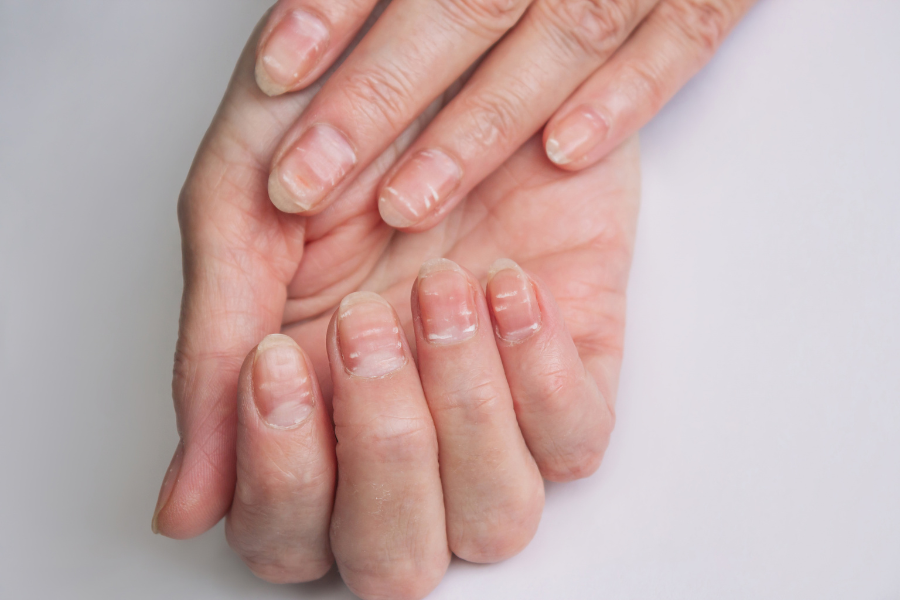

Have you ever run your finger over your nails and noticed raised lines or deep grooves? Maybe you’ve spotted vertical ridges running from your cuticle to the tip, or a horizontal dent cutting straight across the nail plate.
In most cases, these ridges are harmless. But sometimes, they’re a subtle clue about what’s going on inside your body.
Your nails are made from a fibrous protein called keratin. When something disrupts how that keratin forms in the nail matrix, the nail plate grows in unevenly. That’s what creates the lines and grooves you see on the surface.
There are two main types of nail ridges: longitudinal (vertical) ridges and transverse (horizontal) ridges, also known as Beau’s lines. They come from very different causes. In this guide, you’ll learn why each type forms, how to treat them safely, and what you can do to keep them from coming back.
Understanding Vertical Ridges on Nails and Their Causes
Vertical ridges run in straight lines from your cuticle to the tip of your nail. Some people call them “nail wrinkles,” since they tend to show up and become more noticeable with age, much like lines on skin.
Aging and Nail Matrix Slowdown
As you get older, your body’s keratin production naturally slows down. This causes nails to grow thinner, drier, and more brittle over time. The nail matrix, which sits just below your cuticle, produces new cells a little less efficiently each year. That slower, less even growth is often what creates those fine vertical lines.
Nutrient Deficiencies
Your nail matrix needs a steady supply of nutrients to function properly. When it doesn’t get them, ridges are one of the first visible signs.
- Iron deficiency can cause vertical ridging and, in more advanced cases, lead to koilonychia, a condition where nails take on a spoon-like shape.
- Biotin (vitamin B8) plays a direct role in keratin production. Low levels can leave nails weak and ridged.
- Protein deficiency limits the raw materials your body needs to build strong, smooth keratin.
Dryness and Environmental Damage
Repeated handwashing, hot water, cold weather, and harsh household chemicals all strip away the natural oils that keep your nail plate flexible. Once those oils are gone, the nail becomes dry and brittle, and ridges become more visible. Dry skin around the nail bed compounds the problem, since a dehydrated nail plate simply can’t flex and grow as smoothly as a well-moisturized one.
Underlying Medical Conditions
Sometimes vertical ridges point to something more than dryness or aging. A few conditions worth knowing about include:
- Hypothyroidism, which often causes nails to become thick, brittle, and prone to crumbling.
- Inflammatory skin conditions like psoriasis and eczema, which can affect the nail matrix directly.
- Systemic illnesses such as rheumatoid arthritis and lichen planus.
- Rare disorders, including Witkop syndrome, which is linked to distinctive nail changes.
Physical Trauma to the Nail
Your nail matrix is more delicate than it looks. Aggressive filing, frequent use of artificial nail extensions, and acetone-based polish removers can all physically stress the matrix over time. That repeated trauma often shows up later as vertical ridging.
What Are Horizontal Ridges on Nails (Beau’s Lines)?
Horizontal ridges, known as Beau’s lines, look different from vertical ones. Instead of running lengthwise, they cut across the nail plate as a groove or indentation. They’re rarer than vertical ridges, and they usually deserve more attention.
Beau’s lines form when nail growth is temporarily halted or disrupted. Something interrupts the matrix’s normal activity for a period of time, and once growth resumes, that interruption is visible as a line across the nail.
Physical Impact
A sudden injury, like slamming a finger in a door or dropping something heavy on a toe, can bruise or disrupt the nail matrix. As the nail continues growing after the injury, a visible horizontal groove often appears weeks later.
Severe Illness and Fever
When your body is fighting a serious illness, it redirects energy toward more urgent needs and away from processes like nail growth. High fevers in particular are known to pause nail matrix activity. Medical literature has linked Beau’s lines to a number of specific infections, including COVID-19, pneumonia, strep infections, and measles.
Medications
Certain medications, most notably chemotherapy drugs, work by halting rapid cell division. Since nail growth depends on constant cell division in the matrix, these medications can leave a visible horizontal line as a side effect of treatment.
Chronic Conditions Affecting Blood Flow
Nail growth depends on steady blood flow to the matrix. Chronic conditions that disrupt circulation, such as peripheral vascular disease, diabetes, Raynaud’s disease, and chronic kidney disease, are frequently linked to horizontal ridging.
Emotional Stress
It might sound surprising, but severe emotional shock, anxiety, or acute stress can trigger transverse ridges too. The body’s stress response can affect nail growth in much the same way illness does.
Nutritional Deficiency
Zinc deficiency and protein deficiency are classic nutritional causes of horizontal lines. They’re often accompanied by other symptoms, such as small white spots on the nail surface.
Treatment for Ridged Nails: How to Get Rid of Ridges on Nails
Treating ridged nails means addressing two things at once: the cosmetic appearance and, where possible, the root cause underneath.
Start With the Root Cause
The first and most important step is figuring out what’s actually causing your ridges. If a thyroid issue is behind your vertical ridging, thyroid medication can help normalize nail growth over time. If a zinc or iron deficiency is the culprit, correcting that deficiency allows new, smoother nails to grow in.
Keep in mind that nails grow slowly, typically just a few millimeters per month. That means once you address the underlying cause, it can still take several months before you see real improvement. Patience is part of the process.
Nourish With Botanical Oils
Massaging natural oils into your nails and cuticles twice a day can make a noticeable difference. Castor oil, sweet almond oil, and coconut oil are all good options. They help restore some of the moisture and flexibility that daily life tends to strip away.
Smooth the Surface
If you want to minimize the appearance of ridges cosmetically, look for a ridge-filling “CC-effect” care polish. These are often enriched with castor fibers, AHAs, and vitamin E. They work by physically filling in the grooves while also reinforcing the nail underneath.
Try Overnight Repair
Overnight hydration masks can help stimulate cellular repair while you sleep. Apply a rich treatment before bed, then slip on a pair of thin cotton gloves to lock in moisture overnight. Many people notice softer, more flexible nails after just a few nights of this routine.
Buff Carefully, Not Aggressively
It’s tempting to sand ridges away completely, but be careful here. Excessive buffing thins the nail plate and can actually make ridges worse over time.
If you do want to buff, follow these guidelines:
- Use a very fine grit buffer, around 280 grit.
- Buff no more than once a month.
- Always buff gently, moving in the direction of nail growth only.
Prevention of Nail Ridges: Keeping Your Nails Smooth and Strong
Once you’ve addressed existing ridges, the next goal is keeping new ones from forming. A few consistent habits can go a long way.
Eat for Nail Health
A diet rich in fruits, vegetables, clean proteins, and oilseeds supplies the vitamins and minerals your nails depend on, particularly B vitamins, vitamin C, iron, and zinc. If your diet is lacking, talk to your doctor about whether a biotin supplement or a nail-specific supplement makes sense. Look for formulas containing brewer’s yeast, blueberry extract, and key minerals.
Give Your Nails a Break
Constant gel manicures, acrylics, and artificial nail extensions place ongoing stress on the nail plate. Taking regular breaks allows your natural nails to recover and reduces the physical trauma linked to vertical ridging.
Choose Gentler Products
Swap harsh acetone-based removers for gentle, acetone-free alternatives whenever you can. Look for bio-based, non-toxic nail polishes and base coats, which are formulated to be less damaging to the nail matrix over time.
Protect Your Hands
Wear protective gloves when washing dishes or handling cleaning products. Household chemicals and hot water are two of the biggest everyday culprits behind dry, ridged nails.
Handle Your Nails With Care
A few simple habits protect your nail matrix from unnecessary trauma:
- Never bite your nails or pick at your cuticles.
- Avoid pushing cuticles back aggressively.
- Trim fingernails in a gentle curved shape.
- Trim toenails straight across to prevent ingrown nails.
Frequently Asked Questions About Ridges in Nails
Are vertical ridges in nails something to worry about? In the vast majority of cases, vertical ridges are a harmless sign of aging or mild dehydration. That said, if they show up alongside color changes, severe deformation, or pain, it’s worth getting a medical evaluation.
What vitamin deficiency causes ridges in nails? A few different deficiencies can cause ridging. Iron deficiency is linked to vertical ridges and spoon-shaped depressions. Zinc deficiency is associated with Beau’s lines and white spots. Biotin (vitamin B8) and folic acid (vitamin B9) also play a role in keratin production, and low levels of either can lead to ridged nails.
Can I completely get rid of nail ridges? You can’t fully stop or reverse age-related thinning of the nail matrix. However, keeping your nails well moisturized with daily cuticle cream, along with gentle monthly buffing with a fine-grit buffer, can significantly improve their appearance.
When should I see a doctor about nail ridges? Schedule an appointment if horizontal ridges keep returning without an obvious cause, or if you notice sudden shape changes like clubbing, yellow or dark discoloration, pitting, or swelling and redness around the nail bed.
Conclusion
Nail ridges are extremely common, and most people develop some form of them over time. Vertical lines usually point to aging or dry skin, while deep horizontal lines tend to signal a past stressor or illness that temporarily interrupted nail growth.
The good news is that most ridges can be managed and softened with simple hydration habits, smarter manicure choices, and a nutrient-dense diet. Consistency matters more than any single product or trick.
Your nails act as a small window into your overall health. If you notice sudden or highly pronounced changes, it’s always worth checking in with a dermatologist to rule out anything more serious.