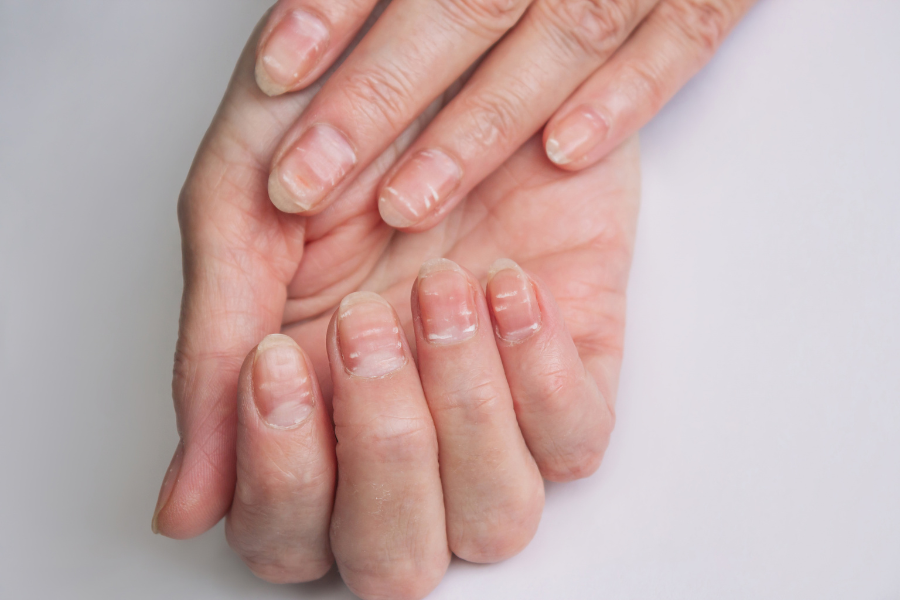


Your fingertips do more than help you type and grip things. The shape, texture, and color of your nails act as a mirror for what’s happening inside your body.
Nails are built by the nail matrix, a specialized tissue tucked just beneath your cuticle. This matrix is remarkably sensitive to your nutritional status. When your body runs low on certain vitamins or minerals over time, that shortfall disrupts normal cell production and slowly weakens your nail structure.
This guide walks you through the most common nail signs of vitamin deficiency. You’ll learn what causes them, which myths to ignore (yes, we’re talking about white spots), how to correct real deficiencies, and when it’s time to see a doctor.
Understanding Nail Signs of Vitamin Deficiency: The Role of Key Nutrients
How Nutrient Shortfalls Disrupt the Nail Matrix
Your nail matrix needs a steady, uninterrupted supply of vitamins and minerals to keep producing healthy cells. When that supply runs short, cell division slows or becomes irregular.
This is why nutritional deficiencies never show up overnight. Fingernails grow at an average rate of about 3–3.5mm per month, according to a PubMed-indexed growth-rate study. Any visible change you notice today reflects something that’s been building for months, not days.
Keratin and Your Nail Plate Structure
Nails are made primarily of keratin, a tough, fibrous protein. Keratin gives your nail plate its strength and flexibility.
Building healthy keratin takes the right nutritional support. Vitamin D and dietary protein both play a direct role in keratin synthesis, helping the nail plate stay strong and resistant to everyday wear and tear.
Vitamin D Deficiency Signs Your Nails Show
How Low Vitamin D Weakens Nail Structure
Vitamin D usually gets credit for supporting bones and immunity, but it plays a role in nail health too. It helps regulate calcium balance and absorption, and calcium levels directly affect how hard and well-developed your nails become.
When Vitamin D runs low, your body’s ability to absorb calcium takes a hit. The result is nails that grow noticeably slower, along with visible changes in texture.
Key Nail Signs of Vitamin D Deficiency to Watch For
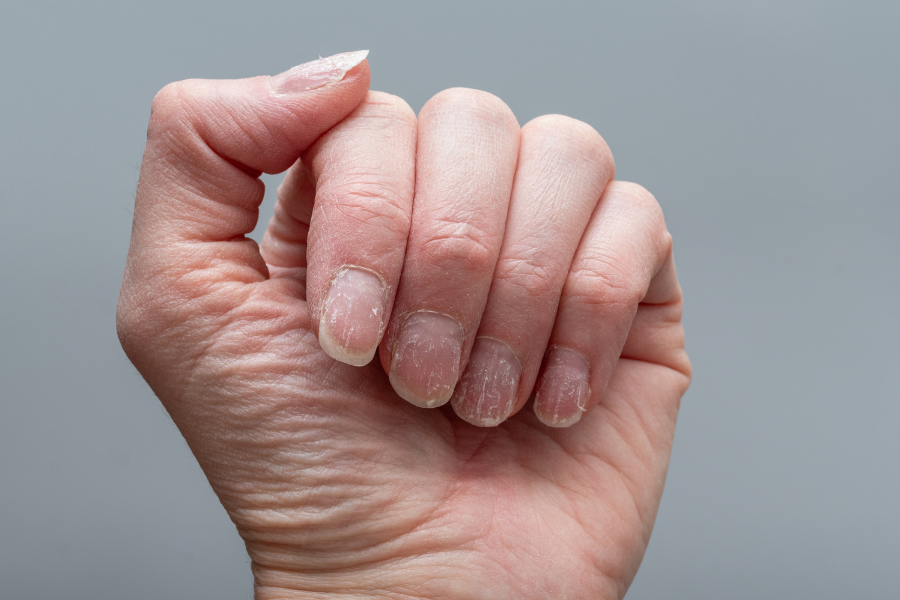
- Brittle, peeling, or splitting nails. Nails that break or peel under very little pressure usually point to a weakened nail plate and insufficient keratin production. This tends to show up on fingernails first, since they face more daily wear from handwashing and everyday tasks.
- Vertical ridges. Raised lines running from the nail bed to the tip can reflect a nutrient shortfall affecting the nail’s surface. Keep in mind these can also appear simply from aging, so context matters.
- Soft or weak nails. Nails that bend too easily under light pressure often signal insufficient nutrient levels overall.
- Slow nail growth. A noticeable slowdown from the typical 3.47mm-per-month baseline is a common early sign.
- Nail pitting. Small dents, dimples, or pinhead-sized pits scattered across the nail surface.
- Yellow or dull tones. A healthy pinkish nail bed fading to yellow, pale, or lackluster.
- Higher infection risk. Weakened systemic immunity can make nails and the surrounding cuticle skin more vulnerable to fungal or bacterial infections.
Beyond Vitamin D: Other Major Vitamin Deficiencies and Brittle Nails
Vitamin B12 and Folate Deficiencies
Low Vitamin B12 can sometimes show up as longitudinal grooves, vertical ridges running from the nail bed to the edge that give the surface an uneven texture. In more severe cases, low B12 or folate can cause dark lines or diffuse dark discoloration across the nail plate, a pattern documented in case reports of B12-related melanonychia.
Since B12 comes almost exclusively from animal products, it’s worth boosting intake through meat, fish, dairy, and eggs, or through a high-quality supplement if your diet is limited.
Biotin (Vitamin B7) Deficiency
Biotin is one of the most talked-about nutrients for nail strength, and for good reason. According to the NIH Office of Dietary Supplements, a deficiency is linked to extreme nail brittleness along with noticeable hair shedding, though the same source notes that true biotin deficiency is rare in people eating a varied diet. Nails affected by low biotin tend to crack and split much more easily than healthy nails.
Mineral and Protein Deficiencies: Key Signs of Nutritional Deficiencies in Nails
Iron Deficiency and Spoon-Shaped Nails (Koilonychia)
Koilonychia describes nails that curve inward, becoming concave enough to hold a drop of water. It’s a distinctive sign, and it’s classically linked to iron deficiency or anemia, a connection documented in a case report published in the New England Journal of Medicine and reviewed in the Cleveland Clinic’s koilonychia overview.
The connection comes down to oxygen. Low iron reduces the oxygen supply reaching the nail matrix, which leads to structural weakness, ridging, and pale-looking nail beds.
Zinc Deficiency and White Streaks
True zinc deficiency is less common than the others on this list, but it does leave distinct markings. Watch for white dots, spots, or horizontal streaks across the nail, often paired with slower-than-normal growth. Zinc deficiency frequently comes with other symptoms too, including slow wound healing, hair thinning, and a weakened immune response.
Protein and Calcium Shortfalls
Since nails are built from keratin, a protein, a diet that’s consistently low in protein can directly affect nail strength and appearance. In some cases, this shows up as discoloration, white lines, or horizontal bands across the nail.
Calcium deficiency is a bit different. It does make nails dry, brittle, and more prone to peeling. However, contrary to popular belief, it does not cause white spots on nails (Cleveland Clinic).
Debunking the Myth: Do White Spots on Nails Indicate Nutritional Deficiencies?
The Scientific Truth Behind Leukonychia
If you’ve ever heard that white spots on your nails mean you need more milk or calcium, you’re not alone. It’s one of the most common nail myths out there, and it isn’t accurate.
Small white dots, known medically as punctate leukonychia, are almost always caused by minor trauma to the nail matrix, according to DermNet and the Cleveland Clinic. Bumping your nail, biting it, or getting a rough manicure are the usual culprits. These spots are harmless, and they’ll grow out naturally along with the rest of your nail.
Other Triggers of White Spots
A few other, less common causes are worth knowing about:
- Allergic reactions to nail products, including polish, hardeners, glosses, removers, and artificial nails.
- Fungal infections, which can create white, chalky patches along with thickening or crumbling edges.
- Systemic conditions, which in rare cases can cause persistent or widespread white spots. Conditions such as low albumin states, liver disease, and kidney disease have all been associated with this pattern.
How to Correct and Prevent Nutritional Deficiencies in Nails
Simple Ways to Address Vitamin D Deficiency
Get natural sunlight. Aim for 10 to 30 minutes of sun exposure several times a week, ideally in the morning or late afternoon to protect your skin.
Add Vitamin D-rich foods. Fatty fish like salmon and tuna, egg yolks, and fortified cereals or plant-based milks are all solid sources.
Consider supplementation. A high-quality Vitamin D3 supplement, often paired with Vitamin K2 or calcium, can help maximize absorption and support both bone and nail health. Talk to your doctor before starting any new supplement.
Restoring Strength to Brittle Nails
Focus on targeted nutrition. Build meals around lean protein, fruits, vegetables, and healthy fats to cover your nutritional bases broadly, not just one nutrient at a time.
Keep nails moisturized. Apply grapeseed oil, a vitamin E hand cream, or a moisturizing lotion daily. This helps prevent the external dryness and cracking that makes brittle nails worse.
Protect your nails physically. Wear gloves during chores, sports, or when handling harsh cleaning chemicals. Keep nails trimmed short to reduce snagging and mechanical stress.
When to See a Doctor for Your Nail Symptoms
Key Red Flags That Require Medical Attention
Reach out to a doctor if you notice any of the following:
- Nail changes that are sudden, severe, or affecting several nails at once.
- Nail signs paired with chronic fatigue, unexplained hair loss, muscle weakness, bone pain, or shortness of breath.
- No improvement after several months of consistent dietary changes and topical care.
What to Expect During a Clinical Evaluation
A doctor’s evaluation typically starts with bloodwork. A 25-hydroxyvitamin D test or a full iron panel is the only reliable way to confirm whether you actually have a deficiency, rather than guessing based on symptoms alone.
If a fungal infection or a systemic condition is suspected, your doctor may also recommend a nail scraping, a KOH preparation, a fungal culture, or in some cases a biopsy.
Frequently Asked Questions on Nail Signs and Vitamin Deficiencies
Can Vitamin D deficiency cause spoon-shaped nails? A prolonged Vitamin D deficiency can contribute to overall nail weakness, but concave, spoon-shaped nails (koilonychia) are much more strongly and classically linked to iron deficiency.
What do protein deficiency nails look like? Since nails are made of keratin, a protein deficiency can compromise their structural integrity, leaving them weak and brittle. In more severe cases, low protein intake can cause white lines, bands, or general discoloration across the nail.
Do white spots on nails indicate a calcium deficiency? No, this is a common misconception. Widespread calcium deficiency does make nails dry, brittle, and prone to peeling, but it is not scientifically linked to white spots. Those are typically caused by minor trauma or injury to the nail.
How long does it take for nails to improve after fixing a nutritional deficiency? Since nails grow slowly, roughly 3.47mm per month, you won’t see instant results. It generally takes several months for a new, healthy nail plate to fully grow out after the underlying deficiency has been corrected.
Do brittle nails always mean a vitamin deficiency? No. Brittle nails can result from many non-nutritional factors too, including frequent water exposure, cold weather, thyroid issues, natural aging, or regular contact with harsh household cleaning agents.
What blood test checks for vitamin D deficiency? The standard clinical test used to confirm your levels and diagnose a deficiency is the 25-hydroxyvitamin D blood test.
Conclusion
Nail changes like brittleness, ridging, or spooning can serve as an early, easy-to-miss clue that something internal needs attention. But on their own, they’re not a diagnosis.
If you notice persistent or worsening nail changes, treat them as a starting point, not a final answer. Address the root cause under medical guidance, give your nails the months they need to grow out fully, and let professional bloodwork guide the rest of your path toward healthier nails.