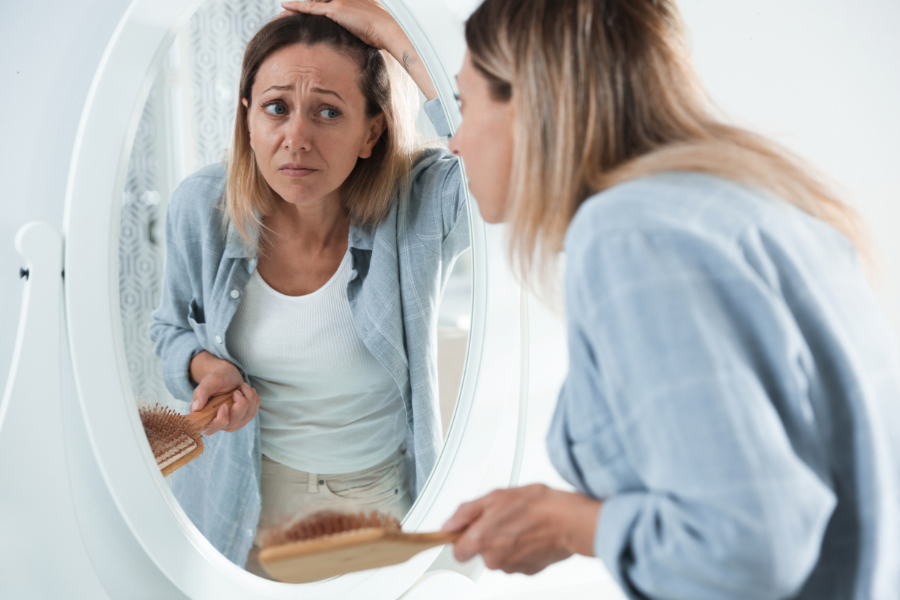

Finding more hair in your brush than usual is unsettling. Watching your ponytail get thinner, month after month, can feel even worse. If you’re in perimenopause or menopause and noticing hair changes, you’re not imagining it, and you’re far from alone.
This guide walks you through why hair thinning happens during the menopausal transition. You’ll learn which blood tests to ask your doctor for, and which treatments are backed by real clinical evidence. Most importantly, you’ll learn that many causes of menopause hair loss are treatable once you know what’s driving them.
Introduction: Demystifying Midlife Hair Thinning
The Emotional Impact of Menopausal Hair Loss
Hair is tied closely to how many women see themselves. It shapes daily routines, styling choices, and even how confident you feel walking into a room. When it starts thinning, the emotional impact can hit just as hard as the physical one.
Male pattern baldness gets talked about openly, almost casually. Female hair thinning doesn’t get the same airtime. That silence can leave women feeling isolated, anxious, or unsure where to even start looking for answers.
If you’ve felt dismissed after mentioning hair thinning to a doctor, you’re not alone in that experience either. Many women describe being told to simply wait it out, or being handed a generic supplement recommendation without any real investigation. That kind of response can feel discouraging, especially when the hair loss is affecting how you feel every single day. The good news is that a thorough workup exists, and it can uncover answers that a quick office visit often misses.
Why a Quick Reassurance Isn’t Enough
It’s tempting for hair thinning to get waved off as just another part of getting older. But that response skips over something important: hair changes are a signal, not just a cosmetic issue.
Dr. Mary Claire Haver, a board-certified OB-GYN and certified menopause practitioner, says hair loss “deserves more than a quick reassurance that it’s simply part of getting older.” Instead, she frames it as a clue that deserves real investigation, one that can point to hormonal shifts, nutritional gaps, or thyroid issues working together beneath the surface.
Understanding the Root Menopause Hair Loss Causes
Menopause hair loss rarely comes from just one source. Several biological processes tend to overlap, each pulling at your hair growth cycle in a different way.
Hormonal Fluctuations: Declining Estrogen and Progesterone
Estrogen and progesterone do more than regulate your cycle. They help keep hair follicles in the active, growing phase of their cycle for longer than they otherwise would be.
As these hormones decline sharply during perimenopause and menopause, that protection fades. Follicles spend less time growing and shift into the resting and shedding phase earlier than before, which is what produces the diffuse thinning so many women notice around this stage of life.
Relative Increase in Androgens and Follicular Miniaturization
Hormones don’t just drop, they also shift in balance. As estrogen falls, androgens like testosterone and dihydrotestosterone (DHT) become relatively more active since there’s less estrogen to offset them.
DHT binds to sensitive hair follicles on the scalp, causing them to shrink over time in a process called follicular miniaturization. Miniaturized follicles produce shorter, finer, more fragile strands, and eventually they may stop producing hair altogether.
Sudden Shedding: Telogen Effluvium in Midlife
Not all hair loss during menopause is female pattern hair loss (FPHL). Some women experience telogen effluvium instead, a temporary but widespread shedding across the entire scalp rather than thinning limited to a specific pattern.
Telogen effluvium tends to follow a triggering event by a few months. Common triggers include:
- Emotional stress
- Acute illness or infection
- Surgery
- Rapid weight loss
- Severe hormonal shifts, including those tied to menopause
Scalp Aging and Compromised Blood Circulation
Aging affects more than the hair itself. Scalp skin thins with age, and collagen production slows, both of which reduce the micro-circulation feeding each hair follicle.
Less circulation means fewer nutrients reaching the follicle. Over time, that nutrient deprivation makes it harder for follicles to sustain healthy hair density.
This is one reason scalp massage and topical treatments that boost circulation are often recommended alongside medical therapy. They won’t reverse hormonal thinning on their own, but they can help create a healthier environment for the follicles that are still active.
Essential Blood Tests for Menopause Hair Thinning
If you’re dealing with unexplained hair loss, don’t stop at a general checkup. A few specific lab tests can uncover non-hormonal contributors that are often missed.
Ferritin (Stored Iron): The Overlooked Hair Growth Catalyst
A “normal” complete blood count doesn’t rule out an iron problem. Hair follicles depend heavily on stored iron, or ferritin, and low ferritin can impair healthy growth even when hemoglobin looks fine on paper.
This connection is well documented. A recent study on women with telogen effluvium found that low serum ferritin levels are significantly associated with the condition, and that ferritin can serve as a useful marker for identifying iron deficiency in diffuse hair loss. If your doctor hasn’t specifically ordered a ferritin test, it’s worth asking for one by name.
Thyroid-Stimulating Hormone (TSH) and Thyroid Function
Both an underactive and an overactive thyroid can disrupt the hair growth cycle. The result is often increased shedding, brittle texture, and slow regrowth, regardless of which direction thyroid function has shifted.
Since thyroid conditions become more common with age, TSH testing belongs on every midlife hair loss workup. One retrospective study of 500 women with telogen effluvium found that those with hypothyroidism had significantly more severe hair loss than women with normal thyroid function or hyperthyroidism, underscoring how closely thyroid health and hair health are linked.
Vitamin D, CBC, and Comprehensive Metabolic Panel (CMP)
A few additional labs round out a thorough workup:
- Vitamin D helps regulate the follicle growth cycle, and deficiency is highly common among midlife women.
- CBC (complete blood count) evaluates overall blood health and helps rule out systemic anemia.
- CMP (comprehensive metabolic panel) checks metabolic, kidney, and liver function, which can all influence hair health when out of balance.
Proven Treatment Options for Menopausal Hair Loss
Once you understand what’s driving your hair loss, you can match it to a treatment that’s actually built for the job. Here’s a breakdown of the options with real clinical backing.
Treatment plans for menopause hair loss aren’t one-size-fits-all. Some women respond well to a single medication, while others need a combination approach that addresses hormones, circulation, and follicle health at the same time. Working with a dermatologist who has experience treating female pattern hair loss can help you avoid months of trial and error.
Minoxidil: Topical vs. Low-Dose Oral Prescriptions
Minoxidil works by extending the active growth phase of the hair cycle and improving micro-circulation to the follicle. Topical minoxidil has been the first-line, FDA-approved treatment for female pattern hair loss for decades, with a long track record behind it.
Low-dose oral minoxidil has emerged as a newer alternative, especially for women who experience scalp irritation from topical formulas or struggle with daily application. A randomized clinical trial published in the Journal of the American Academy of Dermatology found that low-dose oral minoxidil improves female pattern hair loss about as well as topical minoxidil 5% solution, with a safe and well-tolerated profile. That makes it a reasonable option to discuss with your dermatologist if topical treatment hasn’t worked for you.
Prescription Anti-Androgen Medications
Since DHT plays such a direct role in follicular miniaturization, blocking its effects is a common treatment strategy. Anti-androgen medications work by reducing DHT’s impact on the scalp, which can help slow the progression of female pattern hair loss.
The most commonly prescribed oral anti-androgens include:
- Spironolactone, an aldosterone antagonist with antiandrogenic effects. A systematic review and meta-analysis found it may be effective for female pattern hair loss, especially when combined with other therapies.
- Finasteride, which lowers DHT production
- Dutasteride, typically reserved for more severe cases
Regenerative Therapies: Microneedling, PRP, and Low-Level Light Therapy
Beyond medication, several in-office and at-home procedures can support follicle health directly.
Microneedling creates controlled micro-injuries in the scalp, which triggers the release of growth factors that support follicle regeneration. A randomized trial comparing treatment combinations found that microneedling promotes the local release of growth factors through controlled trauma to the upper skin layers, contributing to improved hair density when paired with topical minoxidil.
Platelet-rich plasma (PRP) therapy takes a similar approach from a different angle. It involves injecting concentrated growth factors drawn from your own blood directly into the scalp to support follicle health and density.
Low-level light therapy, sometimes called red light laser therapy, is a non-invasive option that supports cellular energy within follicle cells. It’s often used as a complementary therapy alongside other treatments rather than as a standalone solution.
Holistic and Supportive Care for Menopause Hair Loss
Medical treatment works best alongside supportive daily habits. Nutrition, hormone management, and scalp care all play a role in the bigger picture.
Nutritional Architecture: Protein and Essential Micronutrients
Hair shafts are made of protein, so getting enough of it in your diet matters more than people realize. Aim for a consistent, adequate protein intake throughout the day rather than loading up at just one meal.
A few micronutrients deserve special attention for hair health:
- Vitamin D
- Zinc
- Selenium
- B-complex vitamins, including biotin, B12, and folate
- Vitamin C, which supports collagen synthesis and helps with iron absorption
Some women also look to botanical DHT-blockers like saw palmetto and pumpkin seed oil as a complementary addition to their routine, though these should be discussed with a doctor alongside any prescription treatments.
Bioidentical Hormone Replacement Therapy (BHRT) Guidelines
It’s worth being clear here: BHRT is not FDA-approved specifically for treating hair loss, and it’s not typically prescribed for that reason alone. Its primary role is managing broader menopausal symptoms like hot flashes, sleep disruption, and mood changes.
That said, by protecting follicles from the effects of unopposed androgens, BHRT can secondarily improve hair quality and density for some women. This makes it worth a conversation with your doctor if you’re already managing other menopause symptoms, even if hair isn’t the primary reason for treatment.
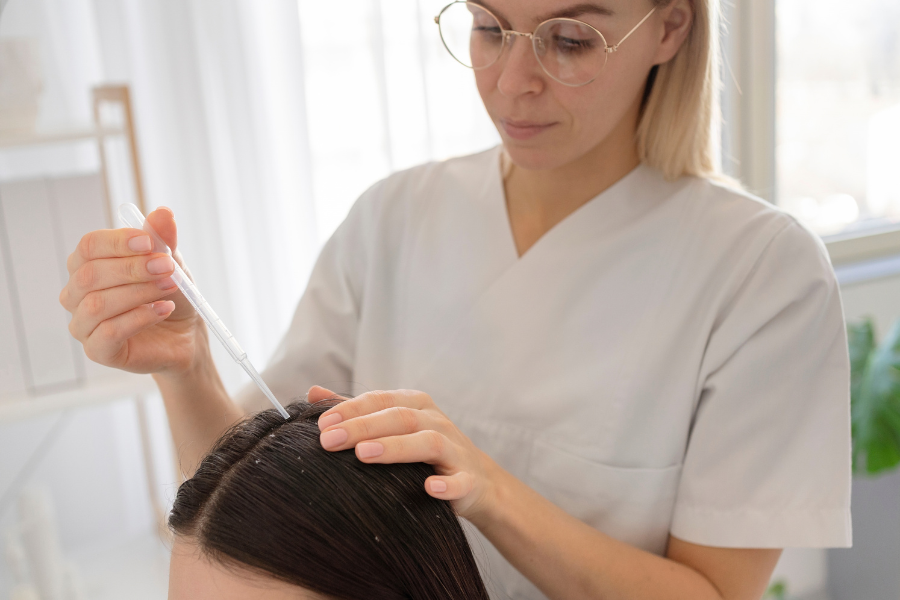
Scalp-Focused Care: Cleanse, Condition, and Treat
Basic hair care focuses on the strand. Scalp care focuses on the environment the follicle actually lives in, and for thinning hair, that distinction matters.
A complete scalp care routine generally includes three steps:
- Cleanse. A shampoo that removes excess sebum and product buildup, which can otherwise block follicles over time.
- Condition. A scalp therapy revitalizer that hydrates the scalp and fragile strands without weighing hair down.
- Treat. A leave-in scalp treatment that delivers antioxidants and soothing ingredients to support the scalp’s skin barrier.
Some scalp serums are also formulated specifically to improve hair anchorage and reduce shedding, often combining ingredients like niacinamide and caffeine. Adding an overnight scalp treatment can further support the scalp’s skin barrier against daily oxidative stress.
Frequently Asked Questions About Menopause Hair Loss
Can hair grow back after menopause? It depends on the root cause. Nutritional deficiencies, thyroid disorders, and telogen effluvium can often be fully reversed once the underlying issue is treated. Female pattern hair loss, on the other hand, is progressive and typically requires ongoing therapy to preserve and recover density over time.
Is low-dose oral minoxidil better than topical minoxidil? Both are effective clinical options. Topical minoxidil remains the first-line treatment with the longest track record. Low-dose oral minoxidil has become a popular alternative for women who experience scalp irritation from topical application or find daily application difficult to keep up with.
What are the warning signs that my hair loss needs immediate dermatological attention? See a board-certified dermatologist promptly if you notice rapid hair loss progression, distinct bald patches, a receding hairline, or scalp symptoms like pain, burning, persistent itching, scaling, redness, or signs of scarring. Some scarring forms of alopecia can permanently damage follicles if left untreated.
Why is combination therapy more effective than single treatments? Because menopause hair loss is rarely driven by just one factor. Combining a follicle-directed treatment like topical minoxidil with a DHT-blocking medication like spironolactone, or adding regenerative procedures like microneedling or PRP alongside nutritional support, tends to produce better results than any single approach alone.
How long does it take to see results from hair loss treatment? Patience matters here. Hair grows in cycles, and it typically takes three to six months of consistent treatment before you notice a meaningful difference. Many women see some initial shedding when starting a new treatment like minoxidil, which is a normal part of the hair cycle resetting itself rather than a sign that something is wrong.
Conclusion: Taking Control of Your Midlife Hair Health
The Importance of Early Intervention
Follicles that have been inactive for a long stretch of time are harder to bring back. That’s why seeking medical guidance at the first sign of thinning matters so much, it gives you the best shot at preserving the density you still have.
Take the Next Step
Menopause hair loss can feel discouraging, but it’s rarely a dead end. With the right lab work, an accurate diagnosis, and a treatment plan matched to your specific cause, meaningful improvement is possible for most women.
If you’re heading into a doctor’s appointment soon, come prepared. Write down when your shedding started, what tests you’d like to request, and any patterns you’ve noticed, so you can advocate clearly for the care your hair actually needs.