

Introduction: Unlocking the Science of Postbiotic Skincare
Trillions of Allies: What Is the Skin Microbiome?
Your skin isn’t just skin. It’s home to trillions of microorganisms, bacteria, fungi, and other microbes, living on its surface as a genuine ecosystem. A balanced, diverse microbiome is foundational to resilient, healthy-looking skin, and when that balance breaks down, it shows up as sensitivity, inflammation, and faster visible aging.
The New Horizon in Skin Barrier Support
Sensitive skin isn’t rare. Estimates vary by study and population, but research reviewed by George Washington University’s School of Medicine and Health Sciences puts self-reported sensitive skin at roughly 70% of the global population, while other epidemiological surveys place it closer to a third to half, depending on how the condition is defined.
Whatever the exact number, sensitive and reactive skin is common, and postbiotics have emerged as a quiet but genuinely science-backed answer. This guide breaks down exactly how these active metabolites work to calm, heal, and fortify skin from the inside of the formula out.
Probiotics, Prebiotics, and Postbiotics: Demystifying the Terminology
Probiotics in Skincare: The Stability Challenge
Probiotics are live, beneficial microorganisms designed to introduce helpful bacterial species directly onto skin. The problem is practical, not conceptual: keeping live bacteria viable and potent inside a jar or tube of cosmetic product is genuinely difficult, and results can vary depending on how well that stability holds up over the product’s shelf life.
Prebiotics: Nourishing Your Microbial Community
Prebiotics are non-digestible botanical compounds, like inulin or specific plant sugars, that act as food to selectively nourish the beneficial bacteria already living on your skin. By feeding the “good” microbes, prebiotics help those populations outcompete and effectively starve out harmful bacteria like Staphylococcus aureus, reinforcing the skin’s natural defenses.
Postbiotics in Skincare: Stable, Bioavailable, and Predictable
Postbiotics are the non-living bioactive metabolites, peptides, enzymes, cell wall fragments, and short-chain fatty acids produced when probiotic bacteria ferment nutrients. Because they contain no living organisms, postbiotics carry a distinct set of formulation advantages:
- Highly stable: No live bacteria means no risk of die-off in the bottle.
- No refrigeration required: They hold up under normal storage and shipping conditions.
- Deeply bioavailable: Their smaller, already-broken-down molecular structure makes them easier for skin to use.
- Consistent results: Formulators can rely on predictable performance batch to batch, without the variability that live cultures introduce.
How Postbiotics Improve Skin Health: Key Biological Benefits
Strengthening the Skin Barrier and Fighting Dehydration
Postbiotics support the tight junction proteins that hold skin cells together and encourage healthy lipid synthesis, both of which help prevent transepidermal water loss (TEWL). The practical result is skin that holds onto moisture more effectively over time, rather than losing it as quickly to the environment.
Postbiotics for Sensitive Skin: Calming Redness and Inflammation
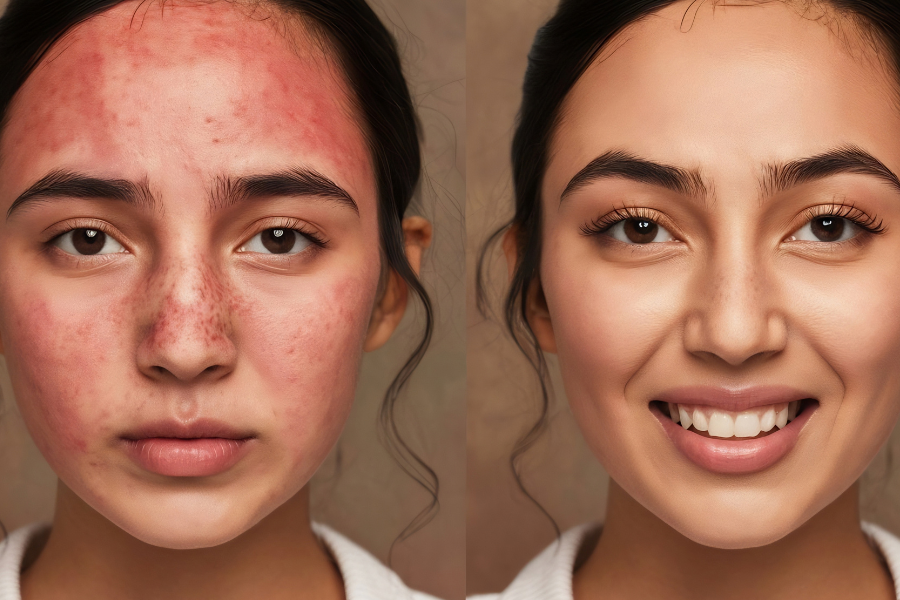
Postbiotics interact with immune-signaling and inflammatory pathways in skin, which is part of why they’re increasingly used in formulas aimed at reactive, easily irritated skin. Rather than simply masking redness, they work by helping modulate the skin’s own inflammatory response.
Cellular Renewal and Anti-Aging Defense
Chronic, low-grade inflammation is closely tied to accelerated aging and collagen breakdown. Postbiotics can help interrupt that cycle by supporting collagen and elastin production and helping neutralize free radicals, which together contribute to improved elasticity and a visible softening of fine lines over time.
Defending Against Acne, Eczema, and Environmental Stressors
By helping rebalance the skin microbiome, postbiotics can support an environment where acne-associated bacteria (now more commonly classified as Cutibacterium acnes, formerly Propionibacterium acnes) are less likely to overgrow. They also contribute to the skin’s broader defense against everyday stressors like urban pollution and UV exposure.
Navigating Key Ingredients and Formulations
Top Postbiotic Skincare Ingredients to Look For
- Lactic Acid: Derived from fermented plant or milk sugars, it gently exfoliates, hydrates, and helps smooth the look of fine lines.
- Bifida Ferment Lysate: A soothing, probiotic-derived metabolite that helps reduce skin reactivity, ease irritation, and support barrier repair.
- Lactobacillus Ferment: Helps restore microbiome balance while deeply hydrating and calming hypersensitive or inflamed-looking skin.
- Saccharomyces Lysate Extract: A nutrient-rich yeast ferment valued for antioxidant properties that support skin elasticity.
The Synergy of Marine and Botanical Bio-Ferments
Some formulators are turning to native botanicals for postbiotic fermentation. Skincare brands like Nuebiome and others working with Australian native ingredients ferment botanicals like Kakadu Plum, Finger Lime, and Hibiscus Sabdariffa to boost their antioxidant activity and anti-inflammatory potential beyond their raw, unfermented form.
Marine-sourced postbiotics are another growing category. Because they’re derived from marine microbes that have adapted to survive extreme environmental conditions, these postbiotics are often formulated for their biocompatibility, antioxidant activity, and barrier-supporting potential, though this remains a newer and less extensively studied area of postbiotic skincare compared to more established bacterial lysates.
How to Integrate Postbiotics into Your Daily Skincare Routine
Step-by-Step Microbiome-Friendly Layering
- Cleanse. Start with a gentle, non-stripping cleanser, ideally one infused with ferments, to clean skin without disrupting its natural acid mantle.
- Treat. Apply a concentrated postbiotic serum, such as one built around a fermented rice or botanical extract, to target deeper skin concerns.
- Moisturize. Layer on a hydrating, postbiotic-infused moisturizer to seal in hydration and reinforce the skin barrier.
- Targeted treatment. Swap abrasive physical scrubs for gentle lactic acid exfoliation, or use a postbiotic-infused sheet mask weekly for extra microbiome support.
Counterbalancing Disruptive Actives (Retinols and Acids)
Retinol, chemical exfoliants, and benzoyl peroxide are effective, but they can temporarily disrupt the skin barrier and microbiome balance. Layering postbiotics alongside these actives, particularly on the days or steps surrounding their use, can help repair the barrier and reduce the odds of a flare-up.
Maximizing Postbiotic Skincare Benefits: Timelines and Consistency
Set realistic expectations. Barrier repair and reduced sensitivity are typically noticeable within two to four weeks of consistent use. Improvements in firmness, elasticity, and the look of fine lines tend to build more gradually, often showing up around four to eight weeks in.
Consistency matters more than any single product. Pairing a postbiotic routine with adequate sleep, a balanced diet, and proper hydration gives your skin the best possible conditions to actually use what you’re applying.
Frequently Asked Questions
What are postbiotics in skincare? Postbiotics are bioactive, non-living compounds, including peptides, enzymes, and organic acids, created during probiotic fermentation. They deliver many of the therapeutic benefits associated with live bacteria, without needing any living organisms in the formula.
Are postbiotics better than probiotics for sensitive skin? For most formulations, yes. Live probiotics face real stability challenges in cosmetic products. Postbiotics are shelf-stable, tend to produce more predictable results, and are generally very well tolerated by reactive or easily irritated skin.
How do postbiotics improve skin health? They help reinforce the physical moisture barrier, reduce water loss, support the skin’s own regulation of inflammation, and contribute to collagen synthesis and free radical defense, all of which support healthier-looking, more resilient skin over time.
Can postbiotics help with acne-prone skin? They can play a supportive role. By helping rebalance the skin’s microbial environment, postbiotics can make it harder for acne-associated bacteria to overgrow, and their calming properties may help ease the look of active breakouts.
Do postbiotics provide anti-aging benefits? Indirectly, yes. By counteracting chronic low-grade inflammation and supporting collagen and elastin production, postbiotics contribute to a more resilient, hydrated-looking complexion, working best alongside proven actives like retinoids and daily SPF rather than replacing them.
Can I layer postbiotics with chemical exfoliants and retinols? Yes. Since actives like retinol and chemical acids can temporarily stress the skin barrier and microbiome, applying postbiotics alongside or after them is a common strategy to help soothe skin and support faster recovery.
Conclusion: Achieving a Balanced, Resilient Glow
Embracing the Future of Fermented Skincare
Building a routine around skin microbiome health, with postbiotics as a core ingredient, is one of the more genuinely science-backed shifts happening in skincare right now. It’s not about adding another trendy step. It’s about giving your skin’s own community of microbes what it needs to do its job.
Nourish and protect that ecosystem, and you’re giving your skin a real chance to self-correct, soothe itself, and age with more resilience over time.