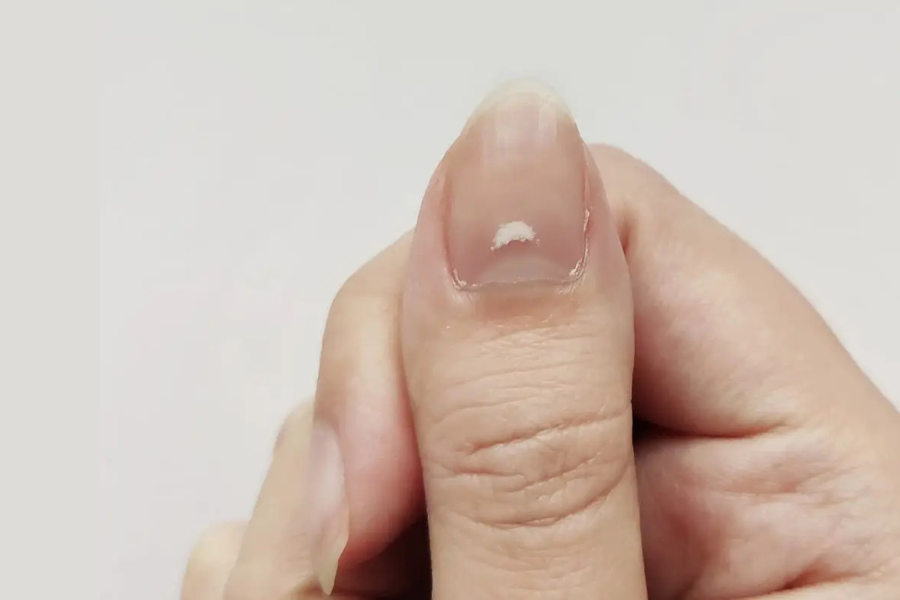
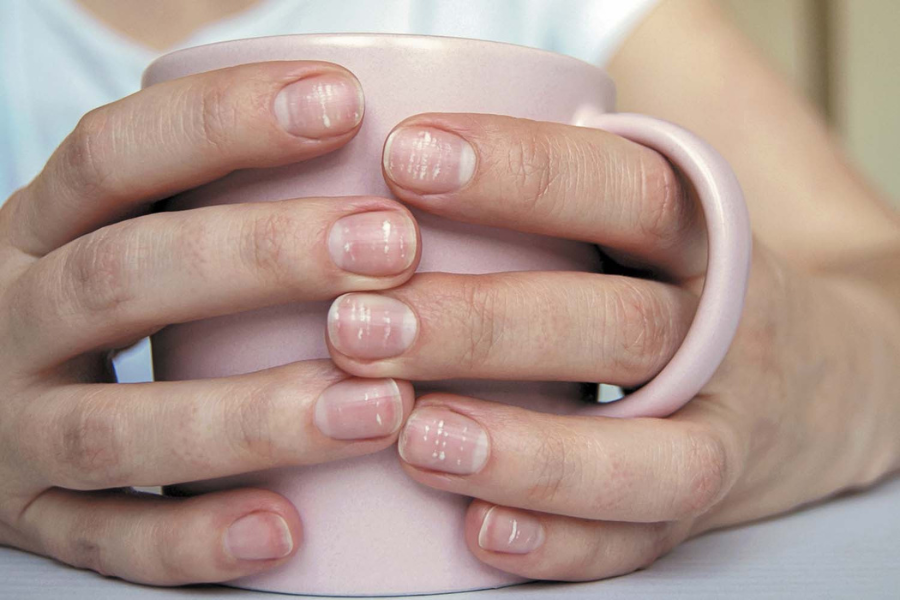

Vitamin D deficiency can show up in your nails before you notice it anywhere else, such as brittleness, slow growth, ridges, and in some cases, nails that curve inward into a spoon-like shape. That said, none of these signs are exclusive to vitamin D alone, and they overlap with other deficiencies, so it’s worth knowing what’s specific and what isn’t. Vitamin D plays a supporting role in nail cell growth and mineral absorption, so a deficiency that persists can weaken nail structure over time. Here’s what to look for, how these signs differ from other deficiency signals, and what to do next if you notice them.
1. Can Vitamin D Deficiency Really Affect Your Nails?
Yes, it can, and here’s why: vitamin D supports calcium absorption and cell turnover, both of which your body needs to produce strong, healthy nail tissue. Vitamin D is usually discussed in the context of bone health and immunity, but the nail matrix, the tissue responsible for producing new nails, is just as sensitive to Vitamin D shortfall. A deficiency that lingers can slow growth and weaken nail structure over the course of several months.
2. The Main Nail Signs of Vitamin D Deficiency
The main nail signs worth watching for are brittleness, slow growth, ridging, and, in more pronounced cases, spoon-shaped nails. These usually develop gradually, so they’re easy to dismiss until they start showing up across more than one nail.
Brittle, Splitting Nails
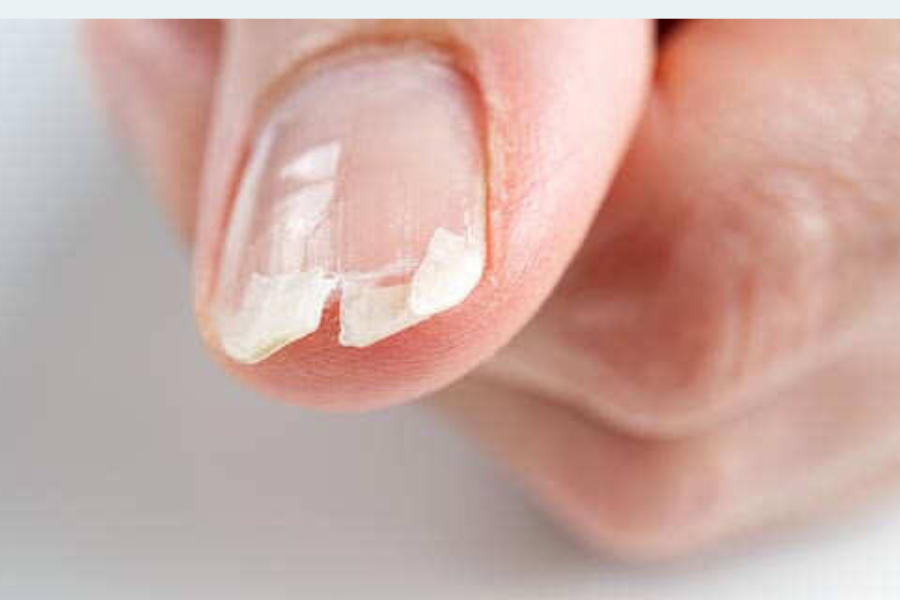
Nails that break, peel, or split without much effort can be a sign of low vitamin D, since the vitamin supports the mineral and protein processes that keep your nail plate strong and flexible.
- Tends to get worse with: frequent hand-washing or exposure to water and chemicals
- More visible on: fingernails than toenails, thanks to daily wear and tear
- Improves: gradually once vitamin D levels are corrected, usually over a few months
Slow Nail Growth
If your nails seem to be growing noticeably slower than usual, that can point to a vitamin D shortfall, since the nail matrix needs a steady nutrient supply to keep producing new cells at a normal pace.
- Good baseline: fingernails grow about 3mm a month on average, so a real slowdown is worth noting
- Often shows up alongside: other deficiency signs like fatigue or bone pain
- Recovers: typically within a few months once the deficiency is corrected
Ridges Across the Nail
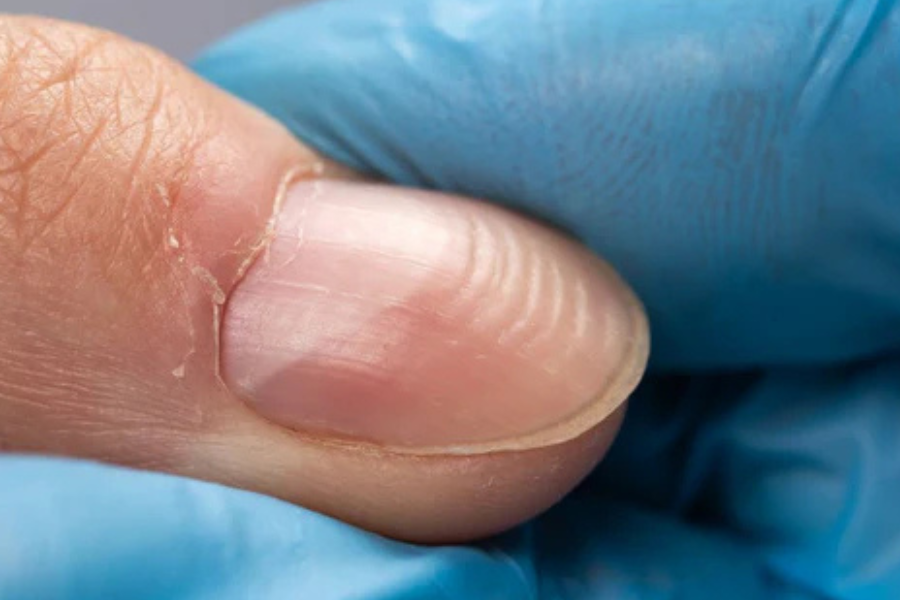
Ridges, whether horizontal or vertical, can develop when nail growth gets disrupted by a nutrient shortfall like low vitamin D, though it’s worth knowing that ridges are also a very common, often harmless part of aging.
- Horizontal ridges (Beau’s lines): are more specifically tied to a growth disruption from illness or deficiency
- Vertical ridges: are usually just a normal part of aging and less deficiency-specific
- Worth flagging: deep or sudden ridging across several nails, more than mild, gradual ridging
Spoon-Shaped Nails (Koilonychia)
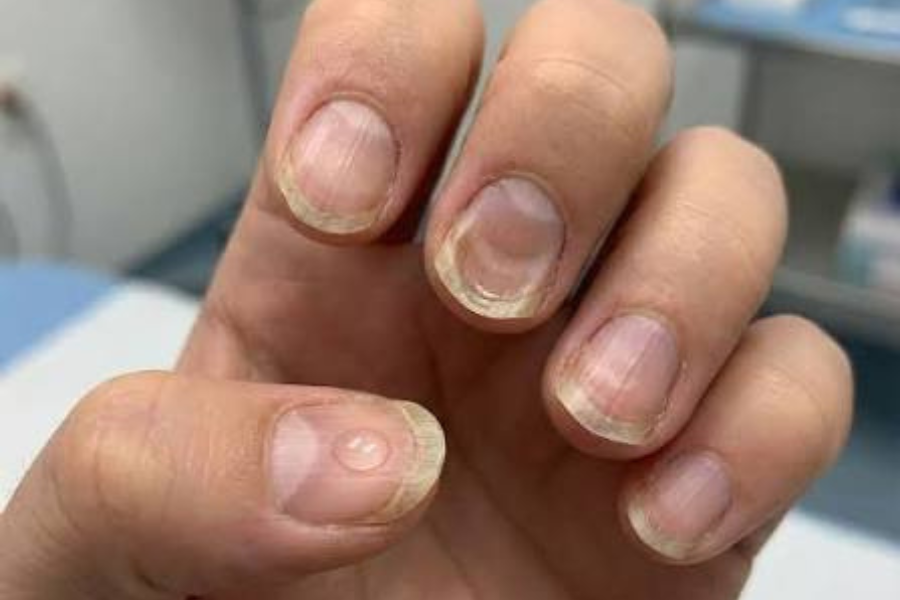
Concave, spoon-shaped nails that curve upward at the edges are a more advanced sign that can show up with a prolonged vitamin D deficiency, though this particular pattern is more classically linked to iron deficiency.
- Look for: a nail that scoops inward enough to hold a drop of water
- Usually signals: a more significant or long-standing deficiency
- Worth doing: a blood test, since it’s often tied to more than one nutrient gap at once
3. How Vitamin D Nail Signs Differ from Other Deficiencies
Vitamin D deficiency nail signs overlap with other nutrient deficiencies, which is why nail appearance on its own can’t reliably tell you which vitamin or mineral is lacking.
- Iron deficiency: more strongly linked to spoon-shaped nails and a pale nail bed
- Zinc deficiency: more associated with white spots and slower wound healing around the nails
- Biotin deficiency: more linked to overall nail and hair brittleness together
- Vitamin D deficiency: more associated with slow growth, ridging, and general brittleness, without the sharp concavity you’d see with iron deficiency
- Protein deficiency: can cause similar brittleness, since nails are made primarily of keratin
Because of all this overlap, treat nail changes as a signal to look deeper rather than a standalone diagnosis.
4. What Other Symptoms Usually Show Up Alongside It?
Nail changes from vitamin D deficiency rarely show up on their own; they’re usually paired with other, more familiar symptoms. Common ones to watch for include:
- Fatigue or low energy
- Bone or joint pain, especially in the lower back and legs
- Muscle weakness or aches
- Mood changes, including low mood during winter months
- Frequent illness, since vitamin D supports immune function
- Hair thinning, in more significant or prolonged deficiency
If your nail changes are showing up alongside several of these, that’s a stronger case for getting your vitamin D levels checked.
5. Who’s Most at Risk of Vitamin D Deficiency?
People most at risk include those with limited sun exposure, darker skin tones, older adults, and anyone with certain digestive or absorption conditions. Since your body makes most of its vitamin D through sun exposure on the skin, spending most of your time indoors, living somewhere with less sunlight, or consistently covering up outdoors can all raise your risk. Older adults face a higher risk too, since the skin becomes less efficient at producing vitamin D with age, and conditions like celiac disease or Crohn’s disease can get in the way of absorption regardless of sun exposure or diet.
6. How Do You Confirm a Vitamin D Deficiency?
A simple blood test measuring 25-hydroxyvitamin D levels is the most reliable way to know for sure, rather than relying on nail appearance alone. Nail signs are a good reason to get tested, but they shouldn’t be used to self-diagnose, since several deficiencies, and even nail conditions that have nothing to do with nutrition, can look similar. A doctor can read the result alongside your other symptoms and map out a correction plan if your levels come back low.
7. How Do You Fix Vitamin D-Related Nail Changes?
Fixing vitamin D-related nail changes starts with correcting the deficiency itself; nail improvement naturally follows as new growth comes in over the following months.
- Get more sun exposure, generally 10–30 minutes a few times a week depending on skin tone and location
- Eat vitamin D-rich foods like fatty fish, egg yolks, and fortified dairy or plant milks
- Take a vitamin D supplement if a blood test confirms a deficiency, at a dose your doctor recommends
- Recheck your levels after a few months to confirm the deficiency has been corrected
- Be patient with your nails: visible change takes as long as it takes for the nail to grow out
8. When Should You See a Doctor?
See a doctor about nail changes if they’re sudden, affecting multiple nails at once, or showing up alongside other symptoms like fatigue, bone pain, or hair thinning. The occasional brittle nail or mild ridging is common and usually nothing to worry about, but a consistent pattern across several nails, paired with other symptoms, is a stronger sign that it’s worth getting a blood test to check vitamin D and related nutrient levels.
The Bottom Line on Nails and Vitamin D
Your nails can be an early, easy-to-miss clue that something’s off internally, but they’re not a diagnosis on their own. If you’re noticing brittleness, slow growth, ridging, or a spoon-like curve across more than one nail, treat it as a nudge to get tested rather than something to fix with polish or a new manicure routine.
Once the actual deficiency is addressed, whether that’s more sun, more vitamin D-rich foods, or a supplement your doctor recommends, your nails will catch up on their own timeline. Give it the months it needs, and let your bloodwork, not your nail bed, guide what you do next.
Frequently Asked Questions
Can vitamin D deficiency cause spoon-shaped nails? It can contribute in cases of prolonged deficiency, but spoon-shaped nails are more classically and strongly linked to iron deficiency than vitamin D alone.
How long does it take for nails to improve after fixing vitamin D deficiency? It typically takes a few months, since improvement depends on new, healthier nails growing out rather than an existing ones changing shape or texture.
Do brittle nails always mean a vitamin deficiency? No, brittle nails can also come from frequent water exposure, harsh chemicals, aging, or thyroid conditions, so a vitamin deficiency is just one possible cause among several.
What blood test checks for vitamin D deficiency? The 25-hydroxyvitamin D blood test is the standard test used to measure vitamin D levels and confirm deficiency.
Can low vitamin D cause white spots on nails? White spots on nails are more commonly linked to trauma or zinc deficiency than vitamin D; low vitamin D is more associated with brittleness, ridging, and slow growth.
Is ridging on nails always a sign of deficiency? No, vertical ridges are usually just a normal part of aging and not deficiency-related, while horizontal ridges appearing suddenly are more likely linked to illness or a nutrient shortfall.
How much vitamin D do I need daily to support nail health? General recommendations range from 600 to 800 IU daily for most adults, though people with a confirmed deficiency often need higher doses under a doctor’s guidance.
Can nail changes from vitamin D deficiency be permanent? No, nail changes from vitamin D deficiency are typically reversible once levels are corrected and the nail has time to grow out with the deficiency resolved.