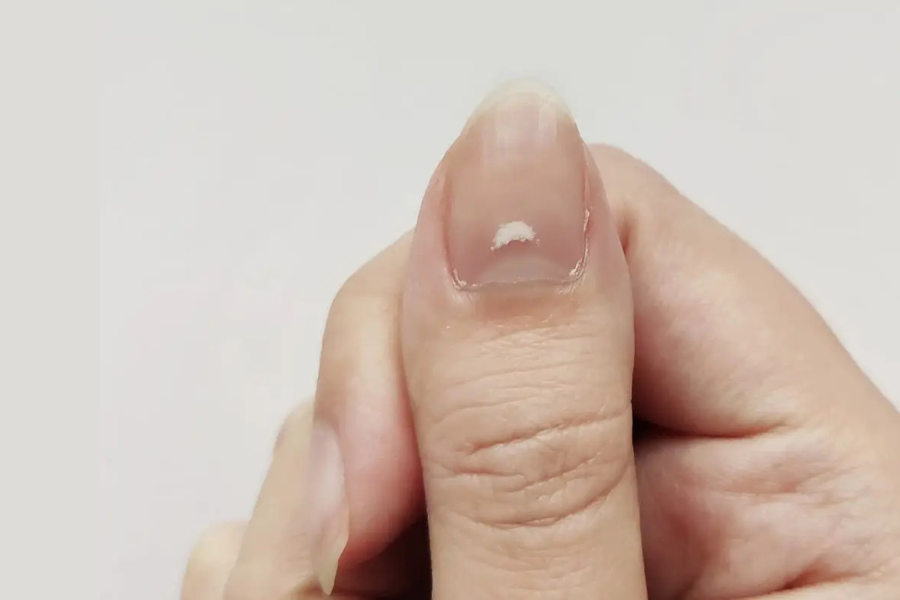

Spotted a little white fleck on your nail and gone straight into “am I lacking a vitamin” mode? You’re not the first. It’s one of those beauty myths that just won’t quit, right up there with chewing gum stays in your stomach for seven years.” Here’s the truth: those spots, known medically as leukonychia, are usually caused by nothing more than minor trauma to the nail bed, think of a stubbed toe or an overzealous manicure. True that deficiency-related spots do exist, but they’re the exception, not the rule. Let’s get into what’s really going on, when a deficiency actually is to blame, and when those spots are trying to tell you something else entirely.
What Causes White Spots on Nails?
Most white spots trace back to physical trauma to the nail matrix, that’s the tissue tucked under your cuticle that’s constantly at work growing new nail. A stubbed finger, a habit of nail-biting, an aggressive cuticle push at your last mani appointment, even everyday bumps you didn’t even notice at that time; all of it can leave a mark. And because nails grow slowly, that mark doesn’t show up until weeks later, which is exactly why most people can never pinpoint what caused it.
Is Leukonychia Always Linked to Nutrient Deficiency?
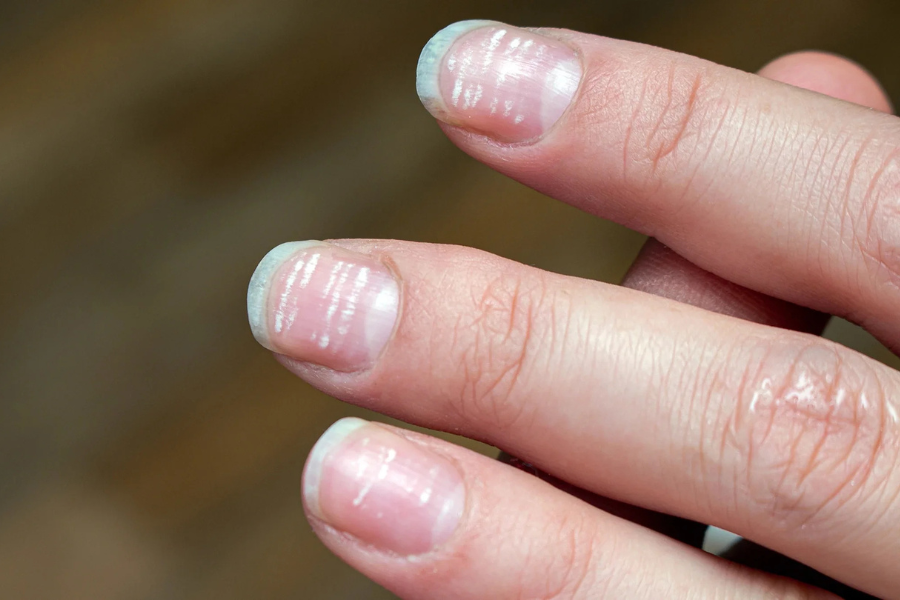
No. In fact, a true nutrient deficiency is the least likely explanation on the list. The trauma-related version, called punctate leukonychia, shows up as small, random white dots and quietly grows out on its own within a few months. Deficiency-linked spots look different: they tend to form uniform white lines or bands (called transverse leukonychia) rather than scattered dots, and they usually show up across several nails at once instead of just one.
Which Vitamin or Mineral Deficiencies Actually Cause White Spots?
If it is a deficiency, three nutrients are usually the cause: zinc, calcium, and protein. Each leaves a slightly different signature.
-
Zinc Deficiency
Zinc is the one most strongly tied to genuine nutrient-related white spots, since it fuels the cell division that builds healthy nail tissue.
- Shows up more in people with restricted diets, malabsorption issues, or heavy alcohol use
- Often paired with slow wound healing or a dulled sense of taste
- Found in shellfish, pumpkin seeds, legumes, and red meat
-
Calcium Deficiency
This is the one everyone blames first, but the science behind it doesn’t support what the myth suggests. True calcium deficiency is fairly rare if you’re eating a balanced diet.
- More common in people with certain endocrine disorders affecting calcium regulation
- Rarely the sole cause unless a blood test actually confirms low levels
- Found in dairy, leafy greens, and fortified plant milks
-
Protein Deficiency
Since nails are basically built from keratin, a protein, running low on protein can weaken the nail matrix over time.
- More common with very low-protein diets or certain absorption disorders
- Usually shows up alongside hair thinning or slow-healing cuts
- Found in eggs, fish, legumes, and dairy
What Other Conditions Can Cause White Spots on Nails?
Trauma and diet aren’t the only reasons. Fungal infections (technically called superficial white onychomycosis) tend to create chalky, irregular patches rather than clean dots, often paired with some nail thickening or crumbling. Allergic reactions to gel polish, hardeners, or nail glue can trigger white discoloration too, and honestly get overlooked way too often. In rare cases, spots or bands across every single nail have been linked to liver or kidney conditions, though that’s uncommon and almost always comes with other visible symptoms too.
How Can You Tell the Difference Between Trauma and Deficiency?

Look at the pattern and how many nails are affected. Trauma-related spots usually show up as a single dot or a few scattered ones on just one or two nails, with nothing else going on elsewhere in the body. Deficiency-related spots tend to form lines or bands across several nails at once, often along with symptoms like fatigue, hair changes, or slow healing. If spots suddenly appear across multiple nails with zero known injury behind them, that’s a stronger signal worth getting checked out.
Do White Spots on Nails Go Away on Their Own?
Yes, if it’s trauma-related, patience is really all you need. Fingernail spots typically grow out within a few months; toenails can take up to a year since they grow slower. There’s no shortcut here, no serum or hack will make it disappear faster, since it’s already baked into the nail structure by the time you can see it. Deficiency-related spots are different though; they tend to stay or keep reappearing until the actual nutrient gap gets corrected.
Should You See a Doctor for White Spots on Nails?
It is worth booking an appointment if the spots show up across multiple nails with no obvious injury, keep coming back after growing out, or arrive alongside fatigue, brittle hair, or slow-healing cuts. A doctor can run a simple blood panel to check your zinc, calcium, and protein levels, and rule out a fungal infection while they’re at it. If it’s just a spot or two on one nail with nothing else going on, waiting it out is usually all you need to do.
How to Support Healthy Nail Growth
Deficiency or not, these habits will keep your nails looking their strongest over time.
- Eat a varied diet with enough protein, zinc, and calcium from whole foods
- Go easy during manicures, avoid aggressive cuticle pushing
- Moisturize regularly to keep nails and cuticles from getting dry and brittle
- Glove up for dishes and cleaning, harsh chemicals do more damage than people think
- Give gel manicures a break every few applications so nails can recover
- Stay hydrated, dehydration makes nails more prone to splitting
- Get a blood test if spots keep showing up across multiple nails with no clear cause
Frequently Asked Questions
Are white spots on nails a sign of calcium deficiency?
Not usually. It is the most commonly blamed cause, but the evidence is weaker than the popular belief, and trauma is far likely the real reason.
What deficiency causes white lines on nails?
Zinc deficiency is the one most credibly linked to white lines or bands, though protein deficiency can play a role too.
Do white spots on nails mean I’m unhealthy?
Not necessarily. Most spots come from small, forgotten bumps and don’t signal a health issue at all, deficiency is the less common scenario here.
How long does it take for white spots to grow out of nails?
A few months for fingernails, up to a year for toenails since they grow more slowly.
Can stress cause white spots on nails?
Not directly, but stress-driven habits like nail-biting or cuticle-picking can cause the trauma that leads to them.
Is it normal to have white spots on just one nail?
Completely normal. One nail usually points to localized trauma rather than a deficiency, which tends to affect multiple nails at once.
What vitamin am I lacking if I have white spots on my nails?
There’s no single definitive one, zinc and protein are the most associated, with calcium playing a smaller, less certain role.
Can a fungal infection look like white spots on nails?
Yes, but fungal patches tend to look chalky and irregular, often with some nail thickening, unlike the smooth dots trauma usually leaves behind.