
Introduction: The New Frontier of Skin Health
The Hidden Ecosystem on Your Skin
Healthy skin isn’t just about cleansing and moisturizing. There’s an entire ecosystem living on your skin right now. Trillions of bacteria, fungi, and microbes make up what’s called the skin microbiome.
This microbiome isn’t just along for the ride. It works constantly with your immune system. Together, they regulate inflammation, block out harmful pathogens, and maintain your skin’s protective acid mantle.
The Shift from “Stripping” to “Nurturing”
Modern life is hard on this ecosystem. Over-cleansing, environmental pollution, and even blue light from screens can disrupt it. The result shows up as sensitivity, redness, and faster visible aging.
That’s where postbiotic skincare comes in. It’s one of the most significant advances in modern dermatology, and it’s built around one simple idea: restore balance instead of stripping skin bare.
What You’ll Learn in This Guide
By the end of this article, you’ll understand the real difference between probiotics, prebiotics, and postbiotics. You’ll also learn the science behind topical postbiotics, how to spot them on ingredient labels, and how to build a routine that actually uses them well.
Probiotics vs. Prebiotics vs. Postbiotics in Skincare: Decoding the Terms
These three words get thrown around constantly, often incorrectly. Here’s what each one actually means.
Probiotics: Why Live Microorganisms Pose Formulation Challenges
Probiotics are live, beneficial bacteria. In theory, they introduce healthy microbial species directly onto your skin.
In practice, this creates a real formulation problem. Keeping live bacteria viable inside a cosmetic product is technically difficult. Potency often degrades before the product even reaches your skin, let alone does anything once it’s there.
Prebiotics: Nourishing the Ecosystem from Within
Prebiotics work differently. They’re non-digestible compounds that act as food for the beneficial bacteria already living on your skin.
Rather than adding anything new, prebiotics support your existing microbiome indirectly. They create the right conditions for good bacteria to thrive on their own.
Postbiotics: The Stable, Bioactive “Finished Products”
Postbiotics are the stable, non-living by-products left over when probiotic bacteria go through fermentation. Think of them as the end result, not the process itself.
These by-products, or metabolites, include bioactive peptides, fatty acids, organic acids, and enzymes. The ISAPP consensus defines a postbiotic as a preparation of inanimate microorganisms and their components that still delivers a real health benefit.
This is exactly why postbiotics have become the standard in luxury skincare. They’re shelf-stable. They’re clinically predictable. Every batch delivers consistent potency, with none of the viability headaches that come with live bacteria.
The Scientific Benefits of Postbiotics for Skin Health and Barrier Repair
Postbiotics aren’t just trendy. They deliver measurable benefits across several areas of skin health.
Reinforcing the Moisture Barrier and Preventing Water Loss
Postbiotics supply key components that fortify your skin’s physical defenses. A stronger barrier seals hydration in and keeps water from escaping through the surface. That’s what gives skin a plump, dewy, resilient look.
Visibly Calming Inflammation, Redness, and Sensitivity
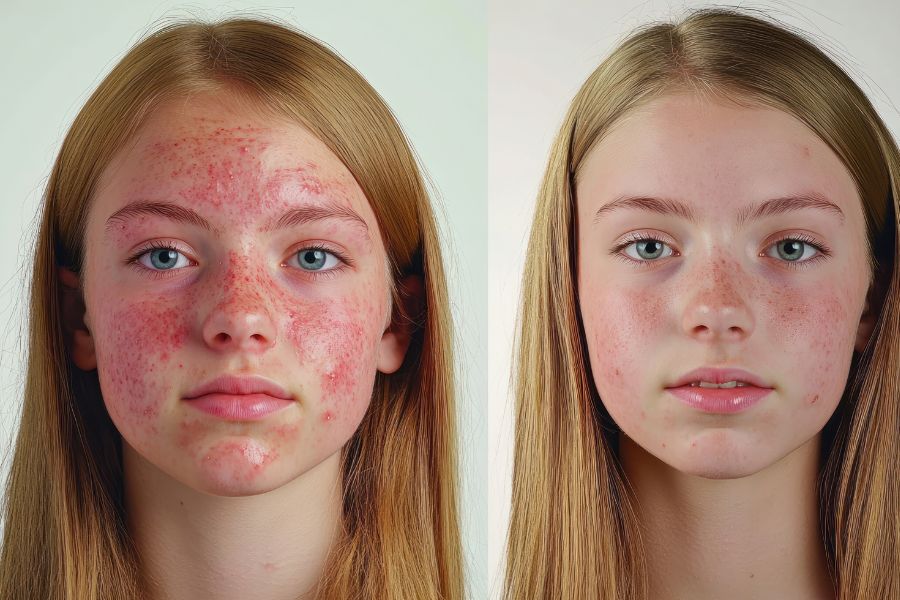
Postbiotics interact with your skin’s immune and inflammatory signaling pathways. This helps calm reactive, easily irritated skin.
They’re particularly effective for compromised skin types, including skin prone to eczema, rosacea, acne, or irritation after shaving. If your skin reacts to everything, this is the ingredient category worth paying attention to.
Anti-Aging Defenses: Boosting Collagen and Elasticity
Postbiotics can stimulate collagen and elastin production, which improves structural firmness over time. As we age, microbial diversity on the skin naturally declines. Postbiotics help counter that decline, softening the appearance of fine lines and wrinkles.
Biological Shielding Against Pollution and Environmental Stress
Many postbiotics carry antioxidant properties. These neutralize free radicals generated by UV exposure, blue light, and urban pollution, adding a layer of environmental defense your skin can’t build on its own.
High-Performance Postbiotic Skincare Ingredients to Look For on Labels
Not every postbiotic ingredient is the same. Here are the ones worth recognizing on an INCI list.
Traditional Ferments: Bifida and Lactobacillus Lysates
Bifida Ferment Lysate is known for soothing, anti-inflammatory, and barrier-strengthening effects. Lactobacillus Ferment Lysate calms sensitivity, helps regulate bacterial balance on the skin, and provides deep hydration.
The Marine-Source Advantage
Some brands, including Cellcosmet, formulate with marine-sourced postbiotics. These come from microbes that evolved in extreme ocean environments, which gives them notably strong biocompatibility with human skin.
Marine postbiotics also tend to show enhanced antioxidant activity and robust biological shielding. Cellcosmet’s proprietary Postbiotics Complex, for example, is designed to form a protective film on the skin’s surface against daily urban stressors.
Botanical and Yeast Bioferments
Yeast fermentation also produces useful bioferments. Saccharomyces Lysate Extract is rich in nutrients and antioxidants that support elasticity. Fermented Rice Extract promotes a more even skin tone and improved hydration.
Ingredient Synergy: How Postbiotics Work With Your Favorite Actives
Postbiotics rarely work alone. Here’s how they pair with the actives already in your routine.
Hyaluronic Acid + Lactococcus Ferment Lysate: The Hydration Powerhouse
Hyaluronic acid pulls water into the skin. The postbiotic then reinforces the barrier so that moisture actually stays put, instead of evaporating away within hours.
Niacinamide + Postbiotics: The Multi-Tasking Brightener
This combination refines uneven tone and texture while keeping the skin’s pH balanced. It’s a gentle option even for skin that reacts poorly to brightening actives on their own.
Ceramides + Postbiotics: The Ultimate Barrier Mortar
Ceramides act like mortar between the bricks of your skin barrier. Postbiotics maintain the surrounding microbiome environment that helps that barrier keep rebuilding itself.
Glycolic Acid + Postbiotics: The Balanced Exfoliator
Chemical exfoliants remove dead skin cells effectively, but they can also irritate. Pairing glycolic acid with soothing postbiotics helps prevent the dryness and barrier stripping that often comes with regular exfoliation.
Urea + Postbiotics: The Moisture Lock
Urea is part of your skin’s Natural Moisturizing Factor. Alongside postbiotics, it helps attract and bind water deep within the skin, rather than just on the surface.
Retinol + Postbiotics: Advanced Cellular and Microbiome Synergy
Retinoids are powerful but can disrupt the skin barrier. Postbiotics soothe that potential irritation, allowing cellular repair and microbiome protection to work together instead of fighting each other.
How to Build a Custom Postbiotic Skincare Routine for a Balanced Glow
Ready to put this into practice? Here’s a simple four-step framework.
- Cleanse without stripping. Use a gentle, non-stripping cleanser, ideally postbiotic-infused, that removes impurities while respecting your skin’s acid mantle.
- Treat with a concentrated serum or bioferment essence. Apply a lightweight, active-rich serum, such as Cellcosmet’s CellLift Serum or Nuebiome’s Biotic Glow Ferment Essence, to target deeper layers with peptides and bioactive compounds.
- Lock and shield with a barrier-first moisturizer. Follow with a rich, protective moisturizer, like Cellcosmet’s Ultra Vital or Nuebiome’s Biotic Radiance-Boosting Hydrator, to seal in hydration and shield against pollution.
- Add weekly restorative care. Once or twice a week, use an intensive postbiotic treatment, such as Nuebiome’s Glyco-Biotic Ultra-Synbiotic Face Mask, to gently exfoliate, brighten, and reset the microbiome.
Expert Tips to Maximize Your Skin Microbiome Results
A few habits make the difference between a routine that works and one that just sits on your shelf.
- Prioritize consistency over intensity. Postbiotics work progressively. Daily, consistent use is what drives permanent improvements in texture and barrier strength.
- Layer thinnest to thickest. Apply postbiotic essences and serums first, then follow with heavier creams and sunscreen, to ensure proper penetration.
- Avoid over-exfoliating and harsh actives. Stripping the skin’s outer layers with aggressive scrubs undermines the microbiome’s ability to heal, which cancels out much of what postbiotics are doing for you.
- Give it the 4-to-8 week window. Texture and sensitivity typically improve within 2 to 4 weeks. Visible firming, lifting, and wrinkle reduction usually take 4 to 8 weeks of cumulative repair. Don’t judge results too early.
FAQs: Common Questions About Postbiotic Skincare and Microbiome Health
What are postbiotics in skincare? Postbiotics are stable, non-viable, bioactive by-products created during probiotic fermentation. These include peptides, enzymes, and short-chain fatty acids that interact directly with skin receptors to reinforce the barrier and calm redness.
How do postbiotics improve skin health? They strengthen the natural moisture barrier, reduce water loss through the skin, regulate inflammatory signaling to soothe sensitivity, and support collagen production to improve elasticity.
Can I use postbiotic skincare with acids or retinol? Yes. Postbiotics pair well with strong actives because they help repair active-induced barrier damage and rebalance the microbiome between treatments.
Are postbiotics safe for highly sensitive or reactive skin? Yes. Postbiotics carry no risk of live infection or viability breakdown. That makes them exceptionally stable, gentle, and appropriate for reactive skin, rosacea, or eczema.
Conclusion: Embracing the Future of Postbiotic Skincare and Microbiome Health
Nurturing Your Skin’s Biological Intelligence
Modern skincare has moved beyond just treating symptoms as they appear. It’s now about supporting your skin’s own biological intelligence. A balanced, healthy microbiome is the real foundation behind a dewy, glowing, youthful complexion, not any single miracle ingredient.
A Question Worth Asking
Take a look at your current routine. Is it stripping your skin, or is it supporting it? If it’s the former, it may be time to explore biofermented, postbiotic formulations built around what your skin’s ecosystem actually needs.