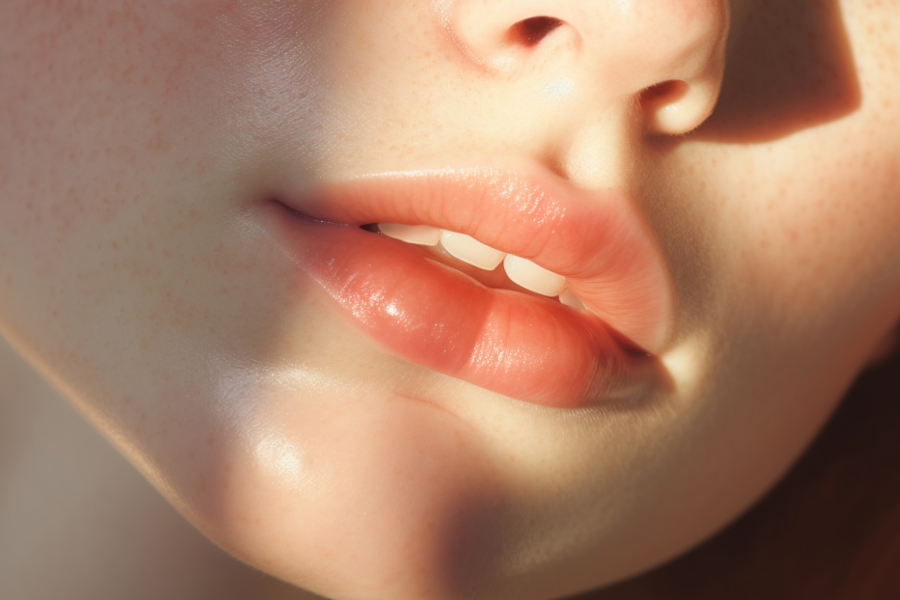

Traditional glossy lipsticks are known to be a hair magnet and stick to anything they touch. This gave this entire genre of lip style a bad reputation. But now this trend has started to rise again, and this time, it comes with new formulas that don’t stick like their predecessors, while providing that classic glass-like finish. So in this article, we will discuss what lip gloss actually means, what sets it apart from ordinary lipsticks, and the best formulas for glossy lips without the sticky effect.
What are glossy lips?

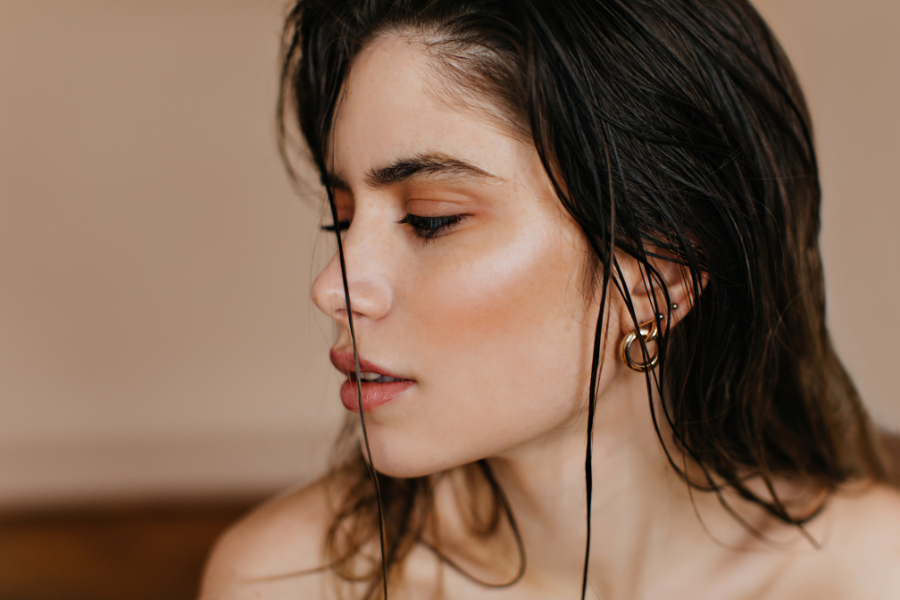
Glossy lips, or lip gloss, is a type of makeup product that gives a wet and shiny look to the lips. In simple terms, it looks glossy and reflects light like a mirror. Celebrities made this look popular, and over time people also tried it. But it had one big flaw.
To achieve that glossy look, the traditional lip gloss used Dense Polybutene and microcrystalline waxes, which gave it an adhesive property. So when the front-side hair or anything came in contact with the lip, it stuck there like glue.
So maintaining it was a big concern, and over time, it became infamous for being extremely sticky. But as science grew, new formulas started to appear that used Block copolymer gels with HPIB or pure lipid esters and botanical oils to fix that. These formulas didn’t just add more character to the glossy genre, but gave it its most awaited non-sticky effect.
Best formulas for glossy lips without stickiness
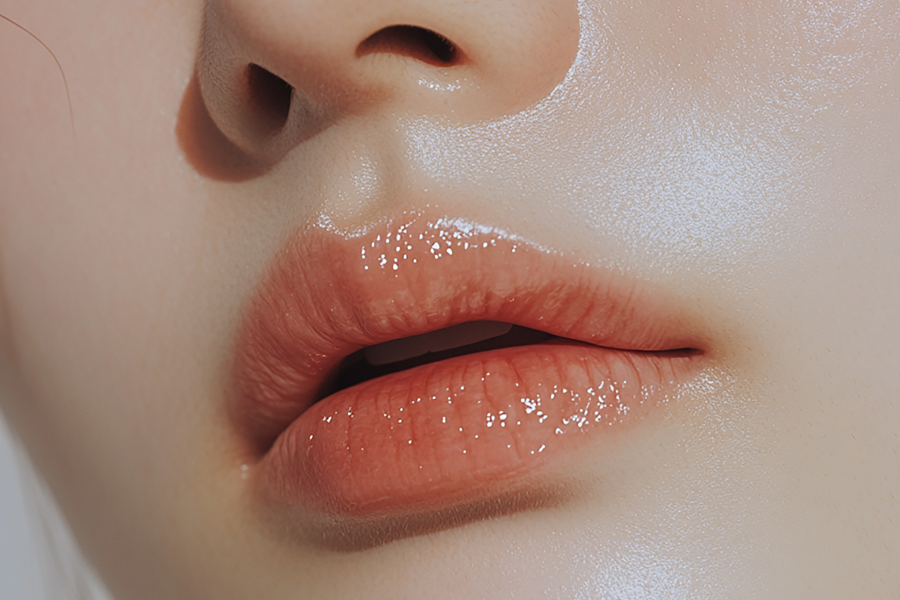
As of now, glossy lips have two main formulas in the market:
Polymer Gel-Gloss
These use Versagel as their main raw ingredient, which is a network of polymers. These polymers are formed with two types of copolymers,
- Ethylene / Propylene / Styrene Copolymer, with
- Butylene / Ethylene / Styrene Copolymer.
These Versagel matrices create a 3d structure for the lip gloss. It provides texture and a smooth layer, but the real gloss comes from Hydrogenated Polyisobutene, or HPIB for short. This is what replaces the traditional mineral oils that had a low refractive index and looked greasy rather than glassy. But since HPIB doesn’t have that problem, its optical performance becomes closer to glass or lacquer.
Pros of Modern Gel-Gloss formulas:
- Best Mirror-like finish: The HPIB reflects light so efficiently that it became one of the best glossy lips one can buy.
- Smooth Surface: The Versagel fills the cracked and uneven surface of the lip in an instant, giving it a smooth surface without much effort.
- Lasts longer than oils: Polymers naturally last longer than oil-based formulas since they don’t get absorbed by the lips.
- Bouncy feel: With non-sticky properties, it also feels bouncy, and when lips are pressed together, it glides.
Cons of Modern Gel-Gloss formulas:
- Slight weight: The two-layer coating gives a distinct heaviness to it. It’s not too heavy, but not too light either.
- Limited nourishment: This specific formula doesn’t provide nourishment to the lip. Instead, it acts as an occlusive seal and locks existing moisture in rather than actively providing it.
- Buildup: Reapplying again and again without removing the older layer can start building up. This may cause slight pooling at the corner of the mouth.
Cushion Lip Oil
Instead of using Versagel to create a 3d layer for the glossy coating, this formula uses extremely lightweight lipid esters or emollient oils like jojoba and squalane. These get actively absorbed into the lip, softening keratin and restoring the lip barrier. While the oil coating gives it a wet and diffused look.
This formula combines skincare and glossy lips together. While it’s not as reflective as HPIB coating, its healing properties make it a popular choice for daily use and health-conscious buyers.
Pros of Lipid Oil formulas:
- Extremely lightweight: Oil bases feel weightless and provide a zero-drag feel. In simple terms, it feels closer to a lip balm than a lipstick.
- Active repair: The same oils actively nourish the lip and repair flaky or chapped lips.
- Almost no residue: This formula almost completely gets absorbed into the lip. This limits product buildup and feels more like a treatment than a temporary shine.
- No stickiness: The stickiness is completely gone. The lightweight oils barely get stuck in anything, even on windy days.
Cons of Lipid Oil formulas:
- Longevity: Since the lip is actively absorbing it, the longevity takes a sharp hit from 2-3 hours for the polymer base to 1 or 2 hours.
- Lower reflection: This formula aims for a soft dewy look rather than the pure glass-like finish. For some, it may be a big problem.
- Possible feathering: The oils can creep outside of the lip and look like tiny spiderwebs. Low-viscosity formulas like this are extremely prone to this.
Conclusion
Getting those perfect glossy lips is not a dream anymore. And thanks to these new formulas, now we have more options than ever. Whether you need a quick mirror-like finish for a photoshoot, Versagel formulas, or the lipid oil for everyday use. Make sure to follow StyleSpeak for more interesting lip-trendy topics just like this one.
Frequently Asked Questions
Can I apply Polymer Gel-Gloss over the Cushion Lip Oil formula?
Ans. Technically, it is possible. But applying both at once usually works against each other. They have different ways to reflect light, and it may cause uneven glossiness.
What is the main difference between glossy lips and regular lipstick?
Ans. It all boils down to optical performance. Regular lipsticks aim for a matte, satin, or cream finish. While glossy lips aim for higher reflection.
How to achieve natural glossy lips?
Ans. Go for lipid-based oils for that natural dewy look.