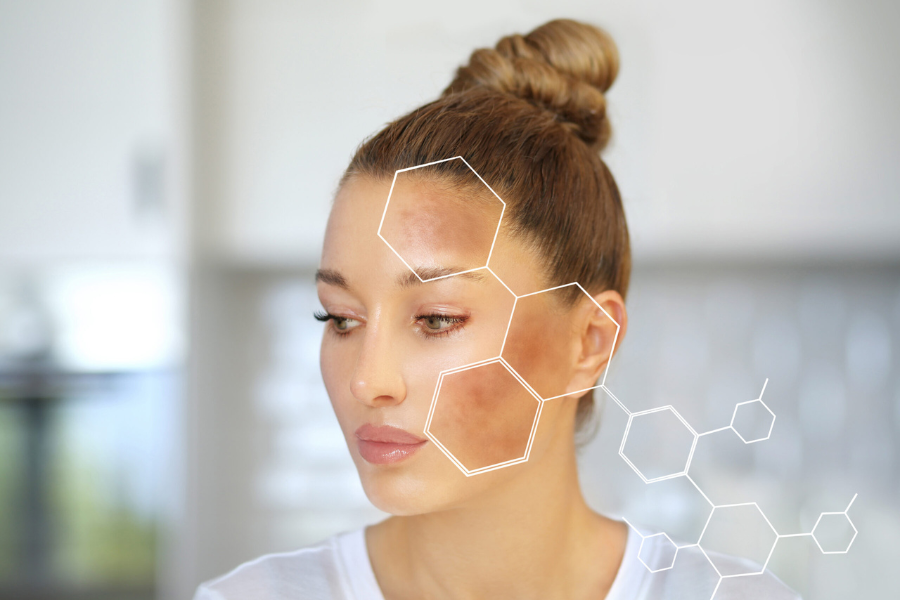

Melasma is a chronic, acquired form of hyperpigmentation, as discussed in Part 1 of this guide, which covered what it is and why it develops. In Part 2, we turn to its treatment and practice. Here,we cover the training every professional needs, the services a salon can safely deliver, when to refer to a clinic, and the home care that holds results between visits.
Why Histology and Anatomy Training Matters

A treatment plan is only as safe as the hands delivering it. Melasma sits at a depth in the skin and could be epidermal, dermal, or mixed in both layers. which are not visible to the naked eye. The wrong depth of exfoliation, the wrong angle on a microneedle, or too much dwell time over a superficial vessel can worsen pigmentation as easily as it improves it.
A therapist who understands skin histology (where melanocytes, keratinocytes, and blood vessels sit within the epidermis and dermis) and facial anatomy (the course of major vessels and nerves, and how skin thickness varies across the face) can match a service to the melasma pattern actually in front of them.
This matters just as much in a clinic as in a salon. In most clinics, it is the esthetician, not the dermatologist, who performs the bulk of the hands-on service under the doctor’s protocol. At minimum, a trained professional should be able to read the pigment pattern using a Wood’s lamp, recognise contraindications, know their concentration ceiling, and spot early complications like post-inflammatory hyperpigmentation before they escalate.
Five Salon Services Worth Recommending
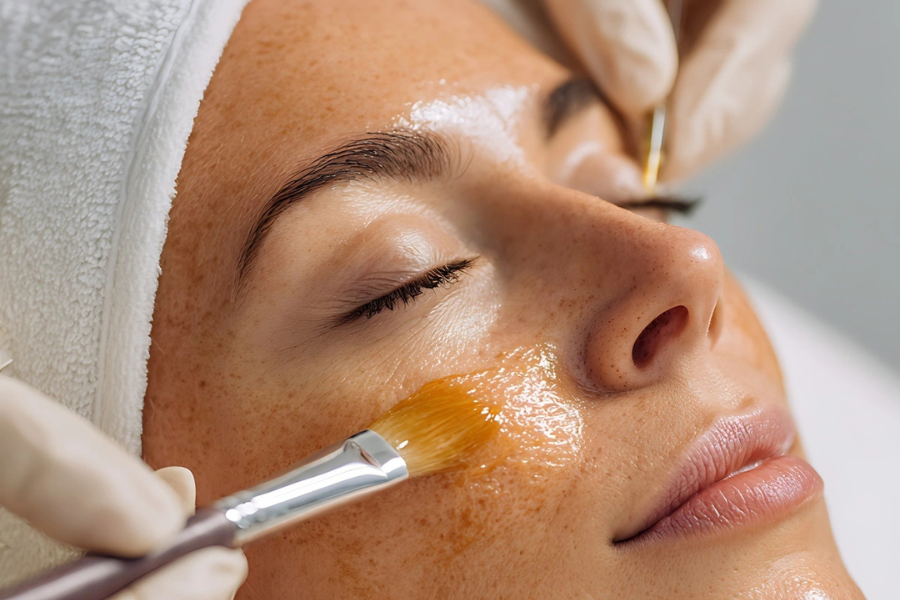
In India, acid peels above 20 to 30% concentration are generally restricted to clinics with an in-house doctor, so these five stay within that legal limit. As a rule, clients need a consistent course, not a single visit, before tone and texture visibly change.
- A glycolic or lactic acid facial peel (20 to 30%), best suited to early, epidermal-pattern melasma, repeated every 2 to 3 weeks; most clients need 6 to 8 sessions over 10 to 12 weeks for a visible shift.
- A mandelic acid facial peel (20 to 30%), for reactive or deeper skin tones, on the same cadence.
- A salicylic acid facial peel (20 to 30%), a better fit where melasma overlaps with oily or acne-prone skin.
- A brightening infusion facial delivered by ultrasonic spatula or cold sonophoresis, built around tranexamic acid, vitamin C, niacinamide, arbutin, and kojic acid, run weekly for 4 to 6 weeks then biweekly, with visible brightening typically by the fourth session.
- LED light therapy in a red and blue combination, layered with an antioxidant serum rather than run alone, twice weekly for the first 2 weeks then weekly, as a support treatment rather than a standalone fix.
Five Clinic-Based Treatments to Refer For
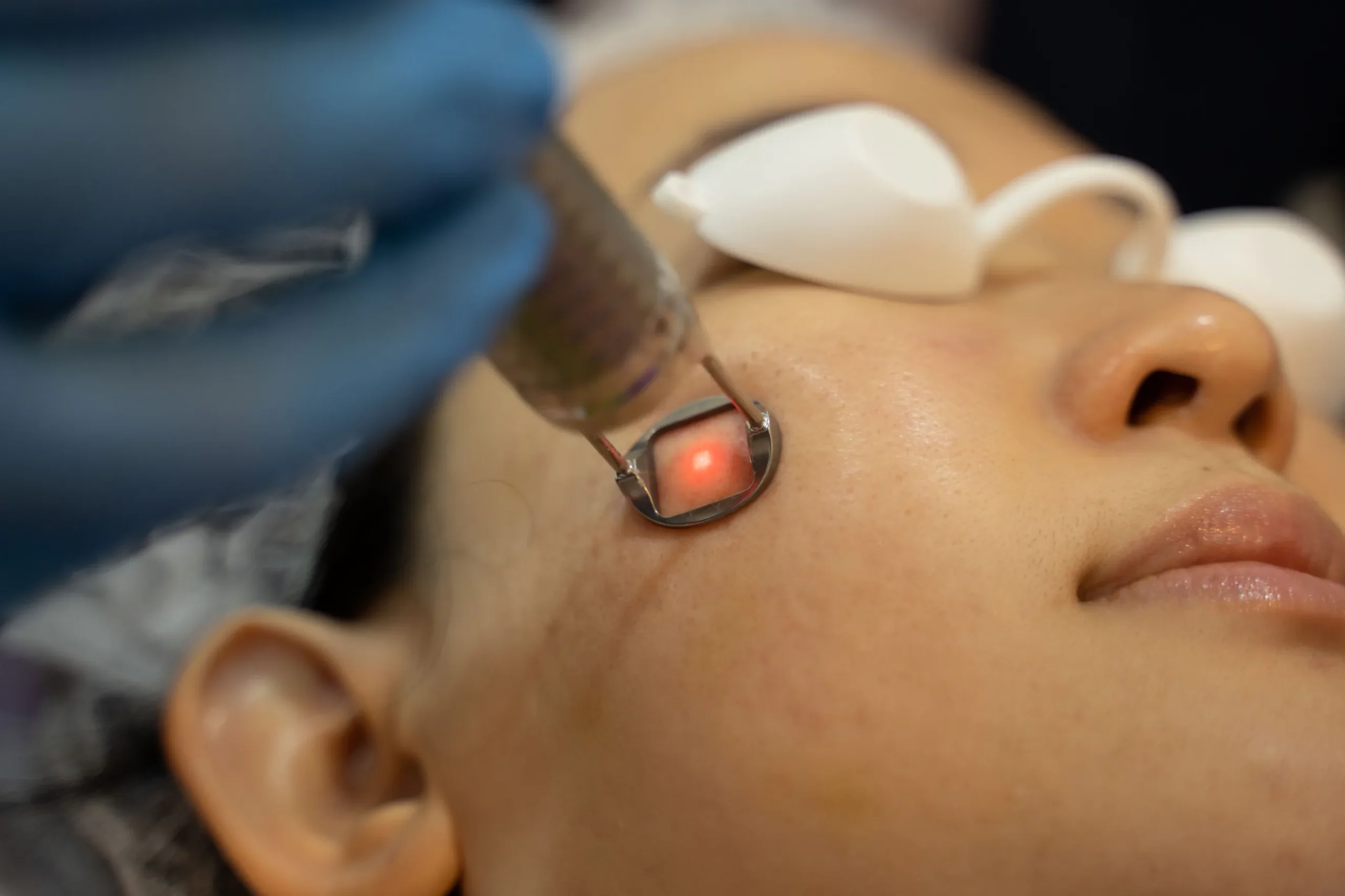
- Controlled chemical dermabrasion, a staged, high-concentration mask combining tranexamic, mandelic, and kojic acid, reaches the papillary dermis and is one of the few in-clinic options shown to meaningfully improve dermal and mixed melasma. In a published 98-patient trial, 30.5% of patients reached a MASI score of 0 (zero) four weeks after the first session,and twelve weeks after the second session, 57.9% of the patients reached the score of 0.
- Topical prescription combinations of a retinoid, corticosteroid, and hydroquinone, monitored by a dermatologist.
- Intradermal microneedling with a tranexamic acid or vitamin C infusion, run as 4 sessions a week apart.
- Q-switched or picosecond lasers, used selectively and conservatively to avoid heat-induced flares.
- Oral or intradermal tranexamic acid, prescribed by a physician after screening for clotting risk.
In a 21-patient trial combining controlled chemical dermabrasion with transdermal tranexamic acid, the mean MASI score fell from 25.50 to 12.79, a reduction of roughly 50% (p<0.0001), over the 8 to 12 week intensive phase, alongside significant improvements in objective colorimetric measures of melanin load.
Before and after a 12-week controlled chemical dermabrasion protocol combined with transdermal tranexamic acid mesotherapy (mean MASI reduced from 25.50 to 12.79, p<0.0001).
Home Care and the Long Game
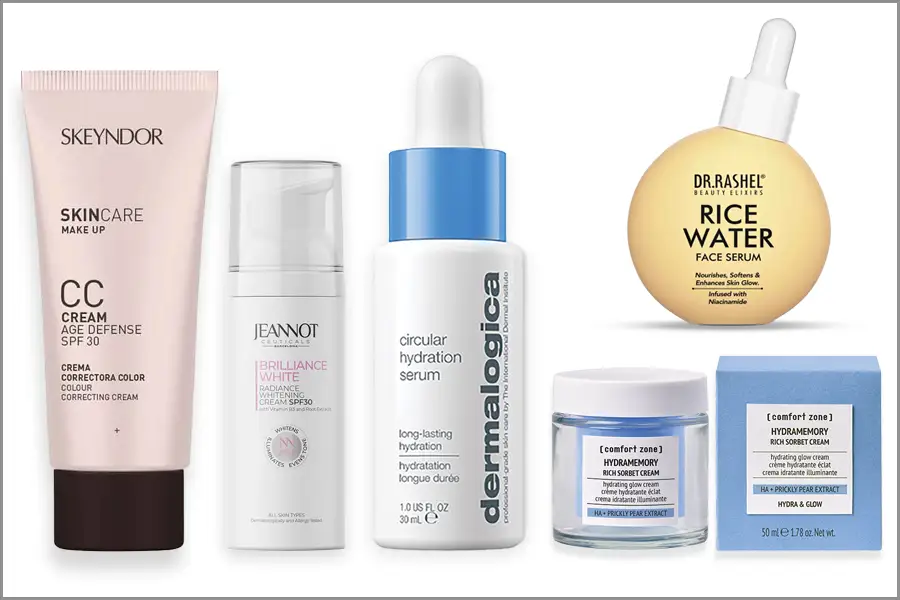
Between visits, guide clients toward proven actives at effective concentrations: broad-spectrum mineral sunscreen (zinc oxide, titanium dioxide), vitamin C, niacinamide at 4 to 5%, azelaic acid, topical tranexamic acid at 2 to 5%, phytic acid at 2 to 4%, kojic acid and arbutin, and night-time retinoids introduced slowly to avoid irritation.
A written maintenance calendar, not a vague instruction to keep using sunscreen, is what keeps clients compliant: taper the frequency of actives over months rather than weeks, since melanocytes in previously affected skin remain more reactive for life.
A Final Word for the Salon Floor
Melasma tests patience, both the client’s and ours. The professionals who earn long-term trust are the ones who set expectations honestly from day one: consistency, the right combination of actives, and daily sun protection, not any single treatment, are what keep melasma under control. With the right training and a specific, well-matched service plan, salons and clinics can work together to give clients visible, lasting improvement.
Sources
Compiled from published clinical studies on the MELINE® and INNO-EXFO® product lines (2016 to 2024) and manufacturer technical literature from Innoaesthetics and Aakaar Medical Technologies Ltd. Full references available on request.