

Your skin is a living ecosystem, not a static surface. It hosts a constantly shifting population of microorganisms that shape everything from how your skin feels day to day to how it ages over time. Postbiotics represent the next real frontier in keeping that ecosystem balanced, and understanding how they work is the key to using them well.
The Science of Skin Microbiome Health: Understanding Your Cutaneous Ecosystem
What Is the Cutaneous Microbiome?
Your skin is home to a complex, dynamic community of bacteria, fungi, viruses, and microscopic mites, specifically from the genus Demodex, collectively known as the cutaneous microbiome. This landscape establishes itself starting at birth, where delivery mode shapes the initial microbial profile, and it continues shifting through major life transitions. Adolescence is a good example: increased sebum production during puberty favors lipophilic species like Cutibacterium acnes, reshaping the skin’s microbial makeup in the process.
There’s no such thing as a single “perfect” microbiome. What’s healthy for your skin is deeply personal, shaped by age, genetics, climate, lifestyle, and the products you use every day.
The Cutaneous Ecosystem in Homeostasis vs. Dysbiosis
In a state of homeostasis, your skin’s resident commensal bacteria act as a genuine first line of defense. Staphylococcus epidermidis, for example, secretes proteases that actively inhibit Staphylococcus aureus colonization and biofilm formation. A foundational review in Nature Reviews Microbiology describes this kind of microbial competition as central to how skin defends itself against harmful invaders, rather than relying on the immune system alone.
Commensal bacteria also provide direct biochemical support. Some convert histidine into trans-urocanic acid, which contributes to UV protection, while others modify surface lipids in ways that reinforce the sebum barrier. When this balance breaks down, a state called dysbiosis, it’s been linked to chronic conditions including acne vulgaris, atopic dermatitis, psoriasis, and rosacea.

Demystifying the Biotics: Probiotics vs. Prebiotics vs. Postbiotics for Skin Health
Probiotics in Skincare (And Why They Face the “Viability Challenge”)
Probiotics are viable, live microorganisms formulated to offer direct physiological benefits when applied to skin. The formulatory hurdle here is substantial. Standard cosmetic preservatives, including phenoxyethanol and parabens, are specifically designed to kill microbes, and they’ll eliminate free probiotic cells within days of formulation. Manufacturing itself adds another layer of stress: high-shear mixing and heat in the 40 to 50°C range used during production can physically rupture and kill live cells before a product even reaches shelves.
This gap between marketing and reality is common enough that it has its own name in the industry: “probiotic-washing,” where a product is marketed around live bacteria but actually contains non-viable ferment lysates or extracts instead.
Prebiotics: Fueling Your Commensal Bacteria
Prebiotics are non-digestible compounds, including inulin, fructo-oligosaccharides (FOS), galacto-oligosaccharides (GOS), and alpha-glucan oligosaccharides, that selectively fuel the beneficial bacteria already living on your skin. Research on alpha-glucan oligosaccharide specifically shows it can selectively promote the growth of desirable skin bacteria while competitively inhibiting pathogenic species like S. aureus, which is the defining mechanism behind how prebiotics work.
Postbiotics: The Safe, Stable, and Powerful Alternative
Postbiotics are preparations of inanimate microorganisms and their components, including lysates, cell-free supernatants, and fermentation-derived metabolites, that confer real health benefits without requiring anything to stay alive. The fermentation process functions almost like a biological pre-digestion step, concentrating protective antioxidants, short-chain fatty acids (SCFAs), and antimicrobial peptides into a stable, ready-to-use form.
Crucially, postbiotics don’t need live cells to work because your immune system recognizes the physical molecular structure of bacterial fragments, like lipoteichoic acids and peptidoglycans, rather than requiring an intact, living cell. That single fact is what gives postbiotics their major formulatory advantage: they’re inherently compatible with cosmetic preservatives, require no cold-chain storage, and remain stable across a wide range of temperatures and pH levels.

How Postbiotics and Skin Microbiome Health Support Your Skin Barrier
Enhancing Physical Barrier Cohesion
Certain postbiotics, like Lactococcus Ferment Lysate, a biotech-developed postbiotic derived from Lactococcus lactis, interact with Toll-like receptor 2 (TLR2) on keratinocytes. This interaction triggers intracellular signaling cascades, including MAPK and NF-κB pathways, that upregulate critical barrier proteins like filaggrin, loricrin, and involucrin. These same pathways stimulate sphingomyelinase activity, which boosts ceramide synthesis and reinforces the extracellular lipid matrix, enhancing hydration and reducing trans-epidermal water loss (TEWL) in the process.
Acidifying the “Acid Mantle” and Preventing Infection
Lactic acid bacteria postbiotics produce organic acids, including lactic and acetic acid, that lower the skin surface’s pH. A review of skin pH’s role in barrier function confirms that this kind of localized acidification creates an inhospitable environment for pathogens like S. aureus, while also optimizing the activity of lipid-processing enzymes, including beta-glucocerebrosidase and acidic sphingomyelinase, that specifically need acidic conditions to function properly.
Biological Priming of Host Innate Defenses
When postbiotic cell-wall components bind to pattern recognition receptors (PRRs) on keratinocytes, they drive the transcription of your skin’s own chemical arsenal. This includes endogenous antimicrobial peptides like human beta-defensin-2 (hBD-2) and cathelicidin (LL-37), effectively priming your skin’s built-in defenses rather than introducing an external one.

The Therapeutic Efficacy of Postbiotics for Common Skin Concerns
Acne Vulgaris: Balancing Sebum and Reducing C. acnes
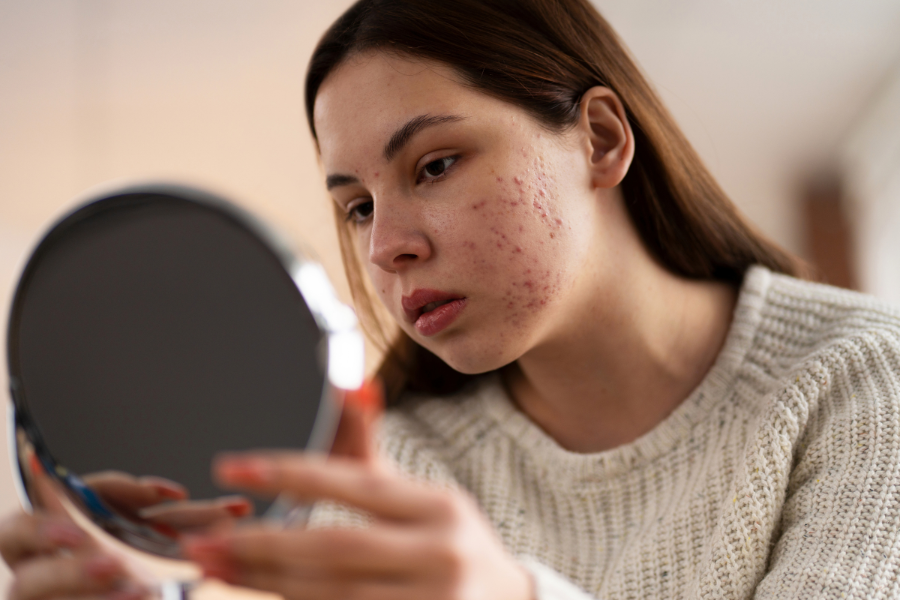
Acne involves follicular hyperkeratosis, increased sebum production, and proliferation of C. acnes. Postbiotic formulations work by suppressing local inflammatory markers like IL-8 and TNF-alpha, while also modulating insulin-like growth factor (IGF-1) signaling tied to sebum production.
Real clinical evidence backs this up. A randomized, open-label comparative study of LactoSporin, a postbiotic derived from Bacillus coagulans (Weizmannia coagulans MTCC 5856), tested a 2% LactoSporin cream against 2.5% benzoyl peroxide gel in 64 subjects with mild to moderate acne over 21 days. The study found LactoSporin achieved comparable reductions in acne lesions and redness to benzoyl peroxide, while performing better at reducing sebum secretion, all without the irritation commonly associated with benzoyl peroxide.
Atopic Dermatitis (Eczema): Reducing SCORAD and Healing the Barrier
Atopic dermatitis features a severely compromised skin barrier, a Th2-skewed immune response, and S. aureus overgrowth. One of the most well-documented postbiotic interventions for this condition is Vitreoscilla filiformis lysate. A prospective, randomized, double-blind, placebo-controlled trial of a 5% V. filiformis lysate cream in 75 volunteers with atopic dermatitis found it significantly decreased SCORAD severity scores and reduced itching compared to placebo over 30 days. The same study found the lysate reduced S. aureus colonization on the skin and produced a measurable improvement in barrier function via TEWL, giving this specific postbiotic some of the strongest clinical backing in the entire category.
Rosacea and Psoriasis: Suppressing the Inflammatory Axis
Rosacea involves neurovascular hyper-reactivity and overproduction of the inflammatory peptide cathelicidin (LL-37). Probiotic and postbiotic approaches are thought to work by downregulating MyD88, TLR2, and NF-κB signaling, which in turn lowers LL-37 and related inflammatory cytokines. Some clinical protocols pair this approach with low-dose doxycycline for combined improvement in both skin and ocular rosacea symptoms.
Psoriasis, meanwhile, is driven primarily by the IL-23/IL-17 cytokine axis. Oral and topical postbiotic therapies are being studied for their potential to help restore Treg/Th17 balance, with the broader goal of reducing systemic inflammatory markers and limiting the translocation of gut-derived toxins into the bloodstream. This research area is genuinely promising but still earlier-stage compared to the acne and eczema evidence above.
Mitigating “Inflammaging” and Promoting Skin Longevity with Postbiotics
Dampening Chronic Low-Grade Inflammation
Extrinsic skin aging is driven substantially by “inflammaging,” the chronic, low-grade inflammatory signaling that gradually degrades the skin’s dermal architecture. Postbiotics function as a kind of biological rheostat here, inhibiting NF-κB and AP-1 signaling pathways that would otherwise upregulate collagen-degrading matrix metalloproteinases (MMPs like MMP-1, MMP-3, and MMP-9).
LactoSporin: A Postbiotic Active With Real Trial Data
LactoSporin, derived from Weizmannia coagulans MTCC 5856, is a heat-stable extracellular metabolite studied for antimicrobial, antioxidant, and multi-enzyme inhibiting properties, including inhibition of collagenase, elastase, and hyaluronidase. A randomized, double-blind, placebo-controlled trial of 2% LactoSporin cream in 56 female volunteers over 10 weeks found a significant reduction in the visibility of wrinkles around the crow’s feet, nasolabial folds, frown lines, and general fine lines, confirmed by both dermatological assessment and Antera imaging, with zero adverse events reported. It’s worth being precise here: instrument-based measurements of elasticity and hydration (via Cutometer, Corneometer, and Tewameter) did not reach statistical significance versus placebo in this particular trial, even though visible wrinkle reduction did. That’s a useful reminder that even well-studied postbiotics don’t deliver every claimed benefit equally.
Cellular Longevity and Emerging Research
Some early research is exploring whether oral postbiotic regimens can influence markers of cellular aging, including telomere length and senescence-associated gene expression, alongside skin tensile elasticity and dermal thickness. This is a genuinely exciting research direction, but it remains earlier-stage compared to the topical barrier and anti-inflammatory research covered above, and results should be treated as preliminary rather than settled.
Advanced Formulations: Synbiotics, AI, and the Future of Skincare
Synbiotics and Sensitive Skin Comfort
Combining prebiotics with postbiotic lysates, such as pairing Vitreoscilla filiformis lysate with alpha-glucan oligosaccharides, is an active area of formulation innovation aimed at providing rapid relief for sensitive, reactive skin. The idea is straightforward: the postbiotic lysate calms inflammation directly while the prebiotic component helps sustain a longer-term, healthier microbial balance.
AI-Driven Personalization and Precision Skincare
The falling cost of next-generation sequencing (NGS), combined with machine learning approaches, is opening the door to genuinely personalized microbiome mapping. Researchers are exploring how these tools might identify specific, youth-associated skin microbes and the metabolites they produce, with the goal of better understanding how to support collagen and elastin recovery in environmentally stressed skin. This field is still emerging, and consumer-facing applications remain in relatively early stages.
Next-Gen Delivery Systems: Smart Biomaterials and Nano-carriers
On the formulation side, next-generation delivery systems, including electrospun nanofibers and microencapsulation techniques, are being developed to protect bioactive postbiotic compounds during storage and ensure more targeted, controlled release once applied to skin. These technologies aim to solve some of the same stability challenges that make live probiotics so difficult to formulate, but for even more delicate or reactive postbiotic compounds.
Frequently Asked Questions
What are postbiotics in skincare? Postbiotics are non-living preparations of microorganisms or their components, such as ferments and lysates, that provide beneficial effects when applied to the skin, helping reinforce the skin barrier and balance the cutaneous ecosystem.
What is the difference between probiotics and postbiotics? Probiotics contain live, active microorganisms, which are fragile and genuinely difficult to keep alive in cosmetic formulas. Postbiotics are non-living preparations derived from these same microorganisms, making them exceptionally stable, safe, and compatible with standard skincare preservatives.
Are postbiotics good for sensitive skin? Yes, they’re generally well suited to sensitive skin. Because postbiotics are non-living, they carry no risk of infection or unpredictable metabolic activity, and clinical research shows they can help reduce irritation, suppress pro-inflammatory pathways, and support skin barrier repair.
Can postbiotics help repair a damaged skin barrier? Yes. Postbiotics like Lactococcus Ferment Lysate are formulated to stimulate cell cohesion, boost ceramide production, and support natural epidermal renewal, contributing to a stronger, more resilient skin barrier and reduced trans-epidermal water loss over time.
Can I use postbiotic skincare with active ingredients like Vitamin C or exfoliating acids? Yes. Unlike live probiotics, postbiotics are structurally robust and chemically stable, which means they can be formulated successfully alongside other actives, including serums that combine postbiotics with vitamin C, or lotions that pair them with glycolic acid.
Conclusion: Embracing Ecological Management in Skincare
Skincare is genuinely shifting away from reactive sterilization, the old habit of harsh cleansing meant to wipe the microbial slate clean, and toward proactive ecological management instead. Postbiotics sit at the center of that shift: a scientifically grounded, safe, and highly stable way to support your skin’s complex microbiome rather than fight against it. The evidence base varies by condition, strongest for acne and eczema, more emerging for rosacea, psoriasis, and longevity, but the overall direction of the research points toward postbiotics playing a lasting role in how skincare is formulated going forward.