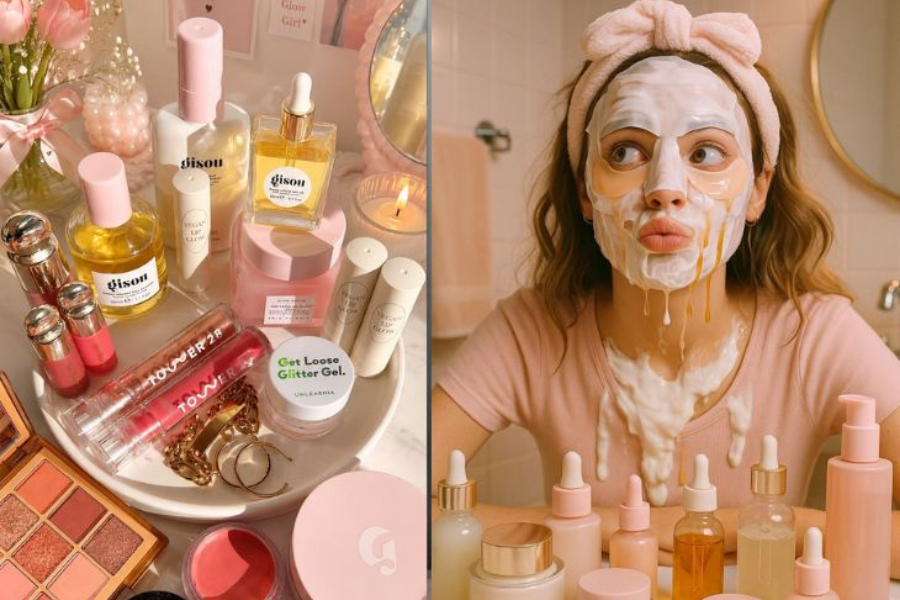

From body care and fragrance to sunscreen and hybrid products, younger Indian consumers are building broader beauty routines influenced by social media and e-commerce.
Beauty for younger Indian consumers is no longer confined to a face wash, moisturiser or lipstick. Their routines are becoming more extensive, with body washes, fragrances, nail care, sunscreen and targeted body treatments increasingly finding a place alongside traditional skincare and makeup.
Products addressing concerns such as pigmentation, dryness, body acne and uneven skin tone are gaining attention, suggesting that consumers are becoming more interested in specific beauty needs rather than relying only on basic personal-care products.
Social media is playing an important role in this change. According to Flipkart, Gen Z accounts for 56% of its beauty and personal care buyers, while nearly 70% discover products through social media. Instagram Reels, beauty creators, YouTube reviews and recommendations from other consumers are helping young shoppers discover products and trends before making a purchase.
The influence of digital beauty culture is also reaching beyond India’s major cities. Nearly two-thirds of beauty-related searches on Flipkart originate from non-metro markets, indicating that consumers in smaller cities are increasingly keeping pace with emerging beauty trends.
This digitally connected generation is expected to have an even greater influence on the market. Estimates from Redseer suggest that Gen Z and Gen Alpha could account for around half of India’s beauty spending by 2030, up from 32% in 2024. E-commerce is expected to benefit from this shift, with online channels projected to account for about 35% of beauty spending by 2030, compared with 8% five years earlier.
Spending patterns are changing as well. Kantar Worldpanel data shows that Indians spend an average of ₹1,214 on essential personal care products every six months. Among working women, the figure rises to ₹1,942 over the same period, amounting to nearly ₹4,000 a year.
Some of the strongest growth is coming from body care. Online body-care sales are increasing by approximately 65–70% annually, as shoppers look beyond conventional lotions towards products designed for particular skin concerns. Body wash is also gaining ground, recording annual growth of around 60–65%, compared with an estimated 40–45% for soap. For younger consumers, it increasingly sits at the intersection of cleansing and skincare.
Sunscreen is undergoing a similar shift. With online sun-care sales growing by approximately 55–60% annually, sunscreen is becoming an everyday product rather than something reserved for summer or outdoor activities. Serums and cleansers remain important online beauty categories, while nail art, despite accounting for less than 1% of the market, is growing at nearly 50% annually.
Beauty discovery is also being influenced by Korean beauty trends, including glass-skin aesthetics, skin-barrier care and streamlined skincare routines. At the same time, hybrid products are gaining popularity among younger consumers who want more from individual products. They are increasingly choosing formulations that can moisturise the skin while adding colour and glow. The result is a shift from viewing makeup and skincare as separate categories, with products increasingly combining the two to meet multiple beauty needs in a single routine.