


Building a healthy skincare routine that targets your specific concerns can be a bit tricky. Compatibility is one concern, but effectiveness for your skin type also matters.
Vitamin C and niacinamide are often discussed together in skincare. Both offer potential benefits, but knowing whether you can use them together and how to layer them is the real question. This article explains what the evidence says about combining these two ingredients.
What is niacinamide and vitamin C?
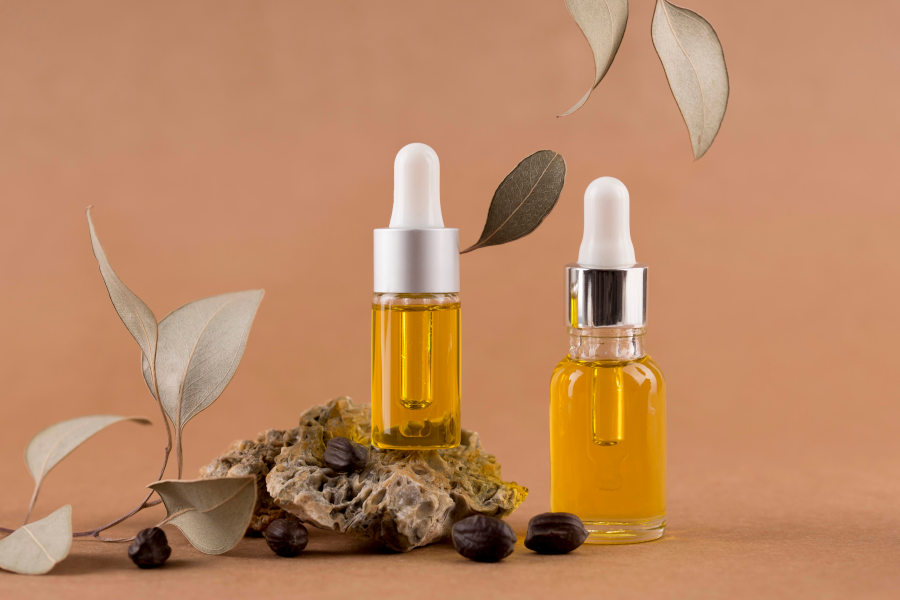
Niacinamide is a water-soluble form of vitamin B3. It can help support the skin barrier, improve moisture retention and reduce the appearance of uneven pigmentation. Some evidence also suggests benefits for oiliness and signs of skin ageing. It is used in moisturisers as well as serums, and tolerability depends on the formulation and concentration.
Niacinamide has anti-inflammatory properties, while vitamin C is an antioxidant. Topical vitamin C may help improve the appearance of uneven pigmentation and signs of photoageing. It can complement sunscreen as part of a daytime routine, but it does not replace sunscreen or its labelled sun protection.
You can generally use vitamin C and niacinamide in the same skincare routine; there is no good evidence that typical modern topical formulations cancel each other out. However, some vitamin C products—particularly low-pH L-ascorbic acid serums—may sting or irritate sensitive skin. Introduce products gradually and consider patch testing before regular use.
How to use vitamin C and niacinamide together?
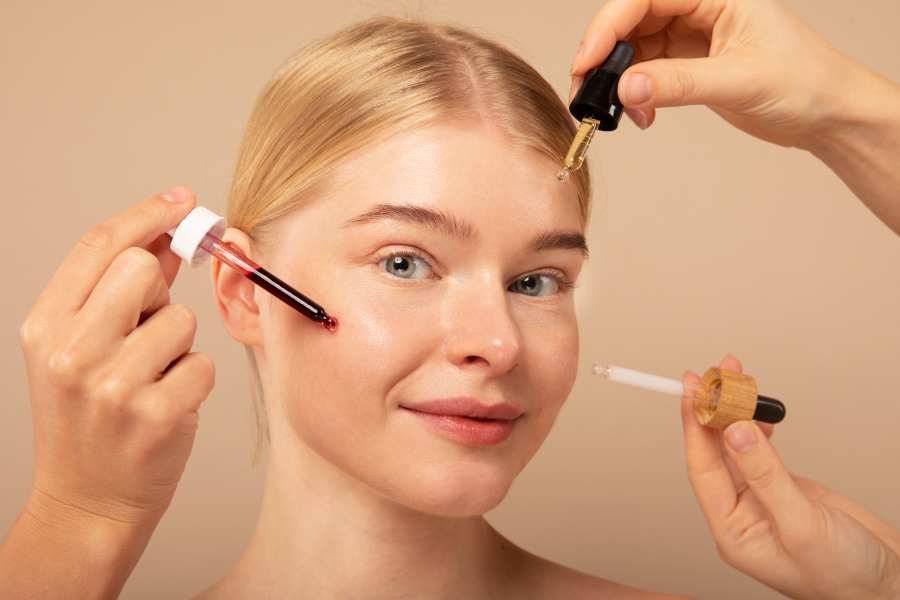
When pairing skincare products, consider three questions:
Which one should I use first?
Should I apply them during the day or at night?
What should be the frequency of use between these products?
Let’s answer these questions one by one, starting with application order.
Which one should I use first?
First, identify which products contain vitamin C and niacinamide and whether they are serums or moisturisers. If vitamin C is in a serum and niacinamide is in a moisturiser, apply the serum first, followed by the moisturiser.
- Start with a serum: After cleansing and gently drying your face, apply the vitamin C serum according to its directions.
- Apply a moisturiser: Next, apply the niacinamide-infused moisturiser to help maintain hydration.
- Apply sunscreen in the morning: Finish your daytime routine with broad-spectrum sunscreen of SPF 30 or higher. Sunscreen is essential for sun protection; vitamin C is not a substitute.
If both ingredients are in serums, there is no universal rule that vitamin C must always come first because of pH. The pH and formulation vary by product, and layering order does not need to be determined by comparing pH values. In general, apply products from thinner to thicker textures, following the product’s directions and your skin’s tolerance.
Should I apply them during the day or at night?
There is no strict morning-or-evening rule for this combination. Vitamin C is often used in the morning because its antioxidant activity can complement sun protection, while niacinamide can generally be used morning or evening. Apply sunscreen as the final step of your morning skincare routine.
You can use the combination in the morning, at night or at both times if your skin tolerates the products. Night-time use is not inherently more healing; choose a routine you can follow consistently without causing irritation.
What should be the frequency of each use?
Both ingredients may be suitable for daily use, but frequency depends on the product formulation, concentration and your skin’s tolerance. Start slowly if you are new to either ingredient, and increase use only if your skin tolerates it.
Niacinamide can often be used once or twice daily when the formulation is well tolerated. Higher concentrations are not necessarily more effective and may irritate some users, so follow the product directions and reduce use if irritation develops.
Conclusion
Vitamin C and niacinamide can generally be used in the same routine, and they may address different skincare concerns. Results depend on the formulation, concentration, consistency of use, and individual skin response. Follow StyleSpeak for more evidence-informed skincare guidance and subscribe to our digital magazine for industry insights.
Frequently Asked Questions
Should I use vitamin C and niacinamide as a serum or as a moisturizer?
Ans. Vitamin C is commonly formulated as a serum, while niacinamide is available in serums, moisturisers, and other products. Choose the format that suits your routine and skin tolerance.
Can I use a single serum with both niacinamide and vitamin C?
Ans. Yes. Some products are formulated with both niacinamide and vitamin C. Check the ingredient list and follow the product directions.
Why do vitamin C and niacinamide work so well together?
Ans. They act through different mechanisms: vitamin C provides antioxidant activity, while niacinamide supports the skin barrier and may help with uneven pigmentation. They can generally be used together, although results depend on the formulations.