
Introduction: Unlocking the Emerging Benefits of Probiotic Cleansers in Dermatology
Your skin hosts trillions of bacteria, fungi, and viruses that work together as its primary protective shield. For decades, skincare treated this population as something to eliminate. Now, dermatology is catching up to a different idea: balance beats elimination.
Conventional, harsh cleansing routines can disrupt that delicate balance, stripping away protective oils and beneficial microbes right along with dirt and makeup. Over time, that disruption has been linked to acne, eczema, and premature aging. Probiotic cleansers offer a different approach, delivering live beneficial bacteria and prebiotics to support skin resilience and calm inflammation instead of scorching the microbial slate clean.
What Is the Skin Microbiome and Why Does It Matter?
The skin microbiome plays a genuinely protective role in healthy skin. It helps regulate inflammation, supports barrier function, and competes with harmful organisms for space and resources. When that ecosystem gets thrown off balance, a state called dysbiosis, it shows up as increased sensitivity, breakouts, or flare-ups of chronic conditions.
Several everyday factors contribute to dysbiosis: harsh surfactants, over-exfoliation, antibiotic use, environmental pollutants, and standard cosmetic preservative systems all play a role in disrupting the skin’s native microbial community.
Why Probiotic Skincare Cleansers Are Replacing “Scorched-Earth” Hygiene
There’s a useful parallel here to how thinking has shifted in home cleaning. The old “kill 99.9% of germs” mindset is giving way to more targeted approaches that leave beneficial microbes intact. Skincare is following the same trajectory, moving from aggressive, sterilizing routines toward a gentler approach that works with the skin’s biology instead of against it.
The Science: How Probiotic Cleansers in Dermatology Balance and Protect Your Skin
Understanding how these cleansers actually work requires a quick look at the mechanisms involved.
Active Mechanism of Action
Probiotic cleansers deliver beneficial microorganisms, or the metabolites those microorganisms produce, including active compounds like lactic acid and bacteriocins that support microbial harmony on the skin’s surface. Quality probiotic cleansers often pair these with prebiotics, which act as “food” to nourish and multiply the protective bacteria already living on your skin. That dual-action approach, feeding good bacteria while introducing more of them, is part of what sets this category apart from a standard gentle cleanser.
Balancing the Skin Microbiome and Reducing Pathogens
Probiotic cleansers are designed to promote protective bacteria while crowding out and reducing pathogenic species competing for the same territory. A balanced microbiome plays a direct role in strengthening the skin barrier, keeping skin hydrated, and preventing trans-epidermal water loss (TEWL), the process by which skin loses moisture to the surrounding environment.
Enhanced Skin Barrier Function and Ceramide Production
One of the more well-documented mechanisms involves Streptococcus thermophilus. Researchers found that a topical cream containing sonicated Streptococcus thermophilus led to a significant increase in stratum corneum ceramide levels after just two weeks of use, alongside measurable improvements in skin hydration. A related study on atopic dermatitis patients found the same ingredient produced a significant increase in skin ceramide amounts within two weeks, along with improvement in the visible signs and symptoms of the condition.
Since ceramides are the lipids responsible for holding the skin barrier together, this connection matters. More ceramides generally means better moisture retention and reduced dryness.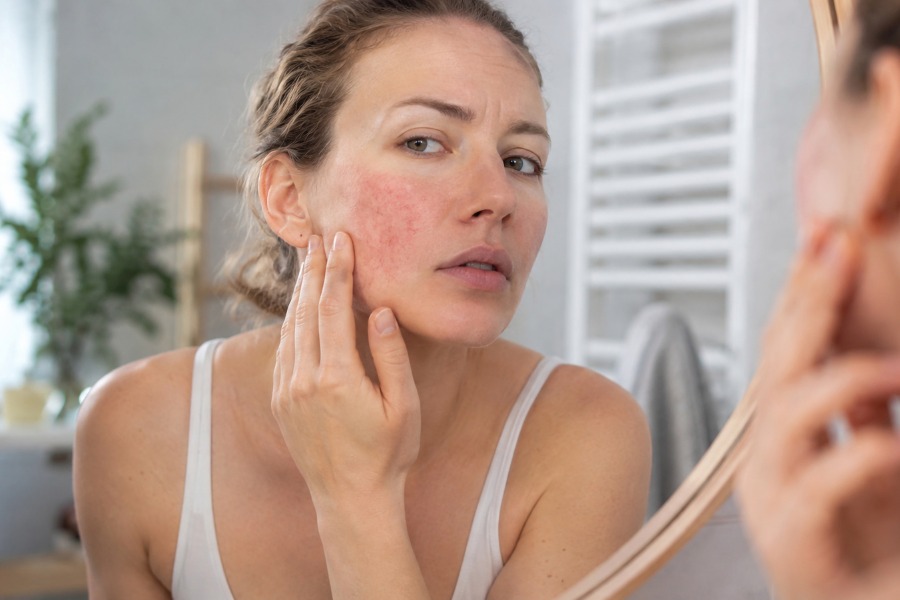
Anti-Inflammatory Properties for Calming Irritated Skin
Key probiotic bacteria, including Lactobacillus and Bifidobacterium strains, are known to inhibit pro-inflammatory signaling that contributes to redness and discomfort. This isn’t just theoretical. A randomized, self-controlled clinical study of a lotion containing probiotic ferment lysate found a significant decrease in both transepidermal water loss and measured redness after 30 days of use, along with a significant increase in skin moisturization. Participants also reported a markedly positive change in how their sensitive skin felt day to day.
Clinical Applications: The Benefits of Probiotic Cleansers for Chronic Skin Conditions
Probiotic Cleansers for Acne Vulgaris (Acne-Prone Skin)
Conventional acne treatments often rely on harsh, stripping ingredients that can leave skin irritated even as they clear breakouts. Probiotic cleansers take a gentler route, working to reduce inflammation and rebalance the microbiome rather than scorching it.
The mechanism centers on Cutibacterium acnes, the bacterial species most closely tied to acne development. A pilot study applying selected, non-acne-causing C. acnes strains topically to acne patients found that shifting the balance of skin bacteria could help modulate the microbiome in a way that supports clearer skin. Separately, a study of a targeted topical probiotic containing Lactiplantibacillus plantarum found that patients who showed clinical improvement also had lower post-treatment C. acnes abundance and maintained more stable microbial diversity compared to those who didn’t improve.
Soothing Eczema (Atopic Dermatitis) via Microbiome Restoration
Eczema is closely tied to a disrupted skin microbiome and physical barrier dysfunction, and this connection has produced some of the strongest research in the entire probiotic skincare category. The National Institutes of Health studied a topical treatment using live Roseomonas mucosa, a bacterium naturally found on healthy skin, in children and adults with eczema. The results were striking: the therapy safely reduced disease severity and increased quality of life in children as young as three, with improvements persisting for up to eight months after treatment stopped.
The mechanism lines up with what we know about eczema-prone skin: a lack of microbial diversity leaves fewer “good” bacteria to compete against Staphylococcus aureus, a bacterium strongly linked to eczema flare-ups. Introducing beneficial bacteria that can hold that territory is the core idea behind restoring balance for eczema-prone skin.
Calming Rosacea and Reducing Sensitive Redness
Rosacea is a chronic inflammatory condition marked by severe skin sensitivity, persistent redness, and flushing. Probiotics appear to help by reducing pro-inflammatory bacterial activity and calming the skin’s immune response.
A randomized clinical trial of 60 rosacea patients tested a combined probiotic and doxycycline protocol, and found that probiotic administration significantly reduced clinical severity scores and inflammatory markers compared to a placebo group, while also improving skin hydration. That’s a meaningful result for a condition that’s historically been difficult to manage without relying heavily on antibiotics.
Practical Considerations: Safety, Stability, and Product Selection

The Challenge of Formulation and Probiotic Survival
Keeping live probiotics stable and viable inside a liquid cleanser formulation is one of the industry’s biggest scientific hurdles. Environmental variables like temperature, light, and the preservative systems needed to keep a product shelf-stable can all work against bacterial survival. This is genuinely an unresolved problem, and it’s worth being honest about it rather than glossing over it.
Future innovations, including encapsulated probiotics, aim to protect bacteria from these stressors during storage so they remain active and ready to work once applied to skin. This is an active area of formulation research rather than a fully solved challenge.
Safety, Sensitivities, and Personalized Skincare
Skin sensitivities vary from person to person, and some individuals may respond differently to specific probiotic strains than others. If you’re managing a chronic condition like eczema, acne, or rosacea, it’s worth consulting a dermatologist to identify which bacterial strains are best suited to your skin type and to verify long-term benefits specific to your case.
Synergistic Ingredients to Look For
Combining probiotics with other established dermatological ingredients, like hyaluronic acid or peptides, can enhance overall hydration and barrier support. Formulations that pair a probiotic or prebiotic base with these complementary actives tend to offer more complete support than a probiotic ingredient used in isolation.
Soleil Derm’s Probiotique Gentle Cleanser is one example of a professional-grade formulation built around this balanced approach, designed to nurture the skin microbiome rather than strip it.
Conclusion: Embracing the Future of Probiotic Skincare in Dermatology
The Paradigm Shift Is Here
Probiotic cleansers represent a genuine scientific shift in skincare, aligning with a broader, global demand for microbiome-friendly formulations. The category has moved well past a passing trend and into an active area of dermatological research.
The Clinical Verdict
Further clinical research is still ongoing, and formulation challenges remain real. That said, current data shows real promise, both for daily maintenance and as a supportive adjunct in treating acne, eczema, and rosacea alongside other established treatments.
Moving from Harsh Disinfection to Microbial Balance
The philosophical shift underlying all of this is simple: we don’t need to wage war on all skin bacteria. We just need to get the right, protective bacteria on our side, and give them the conditions to do their job.
Try a Probiotic Cleanser Today
If you’re ready to move from harsh disinfection toward genuine microbial balance, a gentle, microbiome-friendly probiotic cleanser like Soleil Derm’s Probiotique Gentle Cleanser is a reasonable place to start restoring your skin’s natural resilience.
FAQ: Frequently Asked Questions About the Benefits of Probiotic Cleansers in Dermatology
Q1: What makes probiotic cleansers different from traditional cleansers? Conventional chemical cleansers often aim to strip or “sterilize” the skin, which can disrupt the skin barrier and wipe out good bacteria along with the bad. Probiotic cleansers instead introduce beneficial microorganisms and prebiotics that actively support a balanced microbiome, strengthen the skin barrier, and continue working to keep skin healthy and resilient.
Q2: Are probiotic skincare cleansers safe for extremely sensitive skin? Generally, yes. Clinical research shows that probiotic-based formulations can meaningfully reduce skin sensitivity, redness, and irritation by calming inflammation and restoring barrier function. Because individual skin sensitivities vary, it’s still wise to consult a dermatologist or perform a patch test when trying a new strain for the first time.
Q3: Can probiotic cleansers help with chronic conditions like acne and eczema? Yes, and the evidence base here is growing. Clinical research shows probiotic-based treatments can reduce the overgrowth of acne-linked C. acnes and eczema-aggravating S. aureus by crowding them out with beneficial microbes. NIH-backed trials on eczema in particular have shown meaningful, lasting improvement in disease severity.
Q4: How do probiotics survive inside a cleanser bottle? Maintaining the stability of live bacteria in cosmetic formulations remains one of the industry’s primary hurdles. To address this, advanced skincare brands focus on careful formulation standards and are developing innovations like encapsulated probiotics to keep bacteria viable in the bottle and active only once applied to skin.
Q5: Can I use probiotic cleansers alongside other active ingredients like glycolic acid? Yes. Combining probiotics with other active skincare ingredients is an emerging area of formulation science. Probiotics may help offset the potential irritation or dryness caused by exfoliating acids like glycolic acid by reinforcing the skin’s protective barrier and supporting ceramide levels.