
Postbiotics are the newest of the three “-biotic” terms to reach skincare shelves, and often the least understood. Where probiotics promise live bacteria and prebiotics promise to feed the bacteria already on your skin, postbiotics are neither alive nor feeding anything — they are the finished byproducts left behind after fermentation, ready to act the moment they touch your skin.
In one sentence: postbiotic skincare uses non-living beneficial compounds produced by bacterial fermentation to support the skin barrier and calm the skin, without needing to keep any microorganism alive in the bottle. This guide covers everything you need to know about the category on its own. For how postbiotics stack up against probiotics and prebiotics side by side, see Probiotics vs. Prebiotics vs. Postbiotics Skincare.
The Core Definition
Non-Living Byproducts Left Over After Bacterial Fermentation
Postbiotics are not bacteria, and they are not “almost bacteria.” They are the material by-products left behind once a bacterial culture has already fermented — compounds, fragments, and metabolic outputs that remain stable and active on their own, with no living organism required to deliver their benefit.
What’s Actually in the Jar
On an ingredient list, postbiotics tend to show up under a few recognizable categories:
- Ferment filtrates — the liquid left after a bacterial culture has fermented a growth medium.
- Lysates — fragments of bacterial cells that have been broken down.
- Metabolites — smaller molecules bacteria produce as a byproduct of fermentation, such as lactic acid.
Each of these categories covers dozens of specific ingredients, and formulas often combine more than one type to target different benefits within the same product. For a full ingredient-level breakdown of what shows up on labels and why, see Ferment Filtrates and Postbiotic Extracts.
Why “Postbiotic” Doesn’t Mean Bacteria at All
This is the distinction readers most often get wrong: seeing “biotic” in the name and assuming postbiotic products contain bacteria the same way probiotic products claim to. They do not. By the time a postbiotic ingredient is added a product formulation, the bacteria involved are gone — only their beneficial output remains.
Why Postbiotics Solve the Problem Probiotics Couldn’t
No Live Culture to Keep Alive
This is the category’s core selling point. Probiotic skincare has always faced a basic formulation problem: keeping bacteria alive in a bottle usually requires skipping the preservative systems that keep the product safe to use. A formula that genuinely sustains live cultures needs specialized packaging, tighter storage conditions, and a shorter usage window — all of which add cost and complexity. Postbiotics remove that conflict entirely, since there is no living organism to protect or preserve in the first place.
Longer Shelf Life, More Predictable Performance
Because postbiotic ingredients are already stable, finished compounds, they behave consistently from the day a product is manufactured to the day it is used up. There is no die-off curve to worry about, and no risk that a jar performs differently at month one versus month six. For the person using the product, this translates into a simpler promise: what you apply on day one is essentially what you are still applying when you reach the bottom of the bottle.
Why Formulators Are Increasingly Choosing This Over Live Probiotics
Given the stability advantage, more formulators are building barrier- and calming-focused products around postbiotics instead of attempting to stabilize live cultures. It is also easier to standardize a postbiotic ingredient’s concentration and activity from batch to batch, since there is no living population size to track or maintain. This is a major reason “postbiotic” claims have grown quickly on shelves in the last few years, even though the underlying microbiome science driving the category is shared with probiotics and prebiotics.
How Postbiotic Skincare Is Supposed to Work
Signaling and Supporting the Skin Barrier Directly
Postbiotic compounds are thought to interact with skin cells in ways that support the skin barrier’s structure and function — encouraging the kind of resilience associated with a healthy, well-balanced complexion. Rather than physically replacing barrier lipids the way an ingredient like ceramide does, postbiotics are understood to work more indirectly, supporting the conditions that let the skin maintain its own barrier more effectively.
Calming Inflammation Without Introducing Live Organisms
Because postbiotics deliver a finished, already-active compound rather than a living culture that needs to establish itself, their calming effect is generally understood to work faster and more predictably than a live-bacteria approach would. This is also why postbiotic ingredients are often positioned as suitable for skin that is already reactive or compromised — there is no live organism introduced that the skin needs to adjust to or tolerate.
Where It Overlaps With (and Differs From) Barrier-Repair Ingredients Like Ceramides
Postbiotics and ceramides both get discussed in the context of barrier repair, but they are not doing the same job. Ceramides are structural lipids that physically rebuild the barrier’s outer layer, while postbiotics work more on the microbial and signaling side of barrier health. The two are frequently formulated together rather than as alternatives to one another. For the full comparison, see Postbiotics vs. Ceramides.
What Postbiotic Skincare Claims to Do
Across brands and formulas, postbiotic products are generally marketed around four core claims:
- Repair and strengthen the skin barrier
- Calm redness and reactivity
- Improve tolerance for other active ingredients
- Support long-term skin resilience
Concern-specific guidance for any of these lives in our dedicated pieces, linked throughout this guide.
Is Postbiotic Skincare Worth It?
There is a reasonable and growing body of research behind fermentation-derived ingredients supporting barrier function and calming visible reactivity, particularly for ingredients like bifida ferment lysate and lactic acid ferment that have been studied specifically in topical use.
What’s Still Early-Stage or Overstated
Much of the category’s marketing outpaces the research behind any single formula. Many “postbiotic” claims on the label are broader than what has been demonstrated for that specific ingredient at that specific concentration, and results vary meaningfully between claims and the products.
The Honest, Current Answer
Postbiotic skincare has a genuinely credible mechanism and a stronger formulation-stability story than probiotic skincare does, which makes it a reasonable category to try — especially for barrier support and calming. It is not a guaranteed fix, and it should be evaluated the way any active ingredient is: by looking at the specific formula and its ingredient concentrations, not the category label alone. Two products both marketed as “postbiotic” can differ significantly in what they actually deliver. For the full evidence roundup, including specific studies and ingredients, see Is Postbiotic Skincare Worth It?
Where You’ll Find Postbiotics in Your Routine
Serums
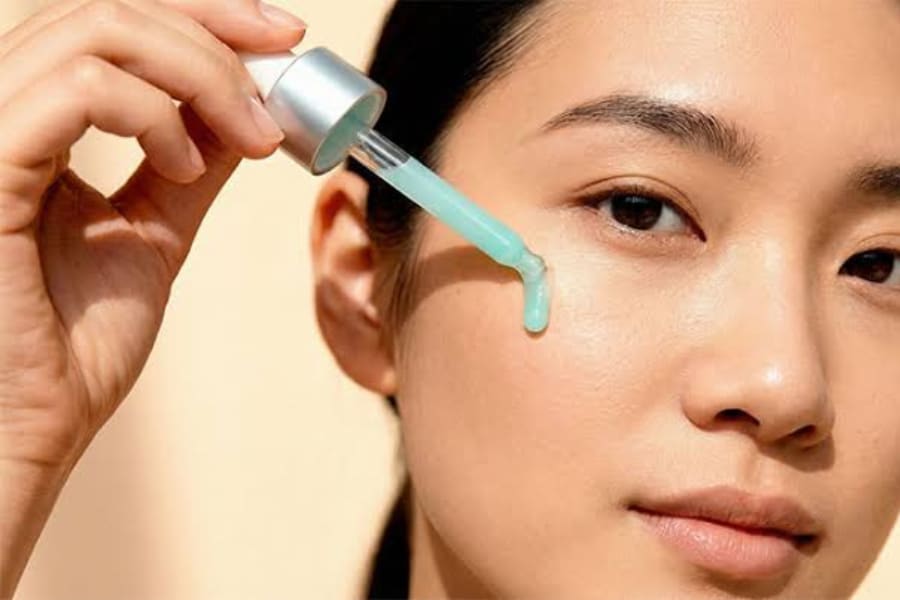
Postbiotic serums tend to carry the highest concentration of active ferment or lysate ingredients, making them a common starting point for barrier and calming concerns.
Moisturizers and Creams
Postbiotics are frequently paired with occlusive and emollient ingredients in moisturizers, combining the barrier-signaling benefit with direct hydration.
Treatments and Masks
Postbiotic ingredients also show up in short-contact treatments and masks, often positioned as a calming or “reset” step rather than a daily leave-on product.
Which format makes sense for you largely comes down to how you already build your routine — a serum layers in as a targeted step, while a moisturizer folds the benefit into a product you were already using. For actual product recommendations and how to choose between formats, see the Postbiotic Skincare Buyer’s Guide.
Who Postbiotic Skincare Is Marketed To
- Sensitive and reactive skin — because postbiotics do not introduce a live organism, they are generally considered a gentler entry point into biotic skincare than probiotics. See Postbiotic Skincare for Sensitive and Reactive Skin for the full concern-specific guidance.
- Compromised or damaged barriers — from over-exfoliation, harsh actives, or environmental stress, where the goal is to support recovery rather than treat a specific visible concern.
- Anyone layering multiple actives who needs a calming buffer between stronger ingredients, such as retinoids or exfoliating acids, without adding another potential irritant to the mix.
How to Know If It’s Worth Adding to Your Routine
Signs It Might Help You
- Your skin barrier feels compromised, tight, or reactive.
- You are introducing new actives and want a gentler supporting layer.
- You have tried probiotic skincare but were unconvinced by the live-culture claims.
How It Fits Alongside Probiotics and Prebiotics
Postbiotics are not a replacement for probiotics or prebiotics — they simply work through a different mechanism. Using a postbiotic serum alongside a prebiotic moisturizer, for example, is a reasonable and non-redundant combination, since one feeds existing bacteria while the other delivers a finished, ready-to-use compound. If you are already using a probiotic product and want to add a postbiotic step, there is no formulation conflict to worry about — the two categories are not competing for the same job.
How to Introduce It Into an Existing Routine
Start with a single postbiotic product, such as a serum or moisturizer, rather than overhauling your full routine at once. This makes it easier to judge whether the addition is genuinely improving barrier comfort and resilience.