

In this guide, you will learn how to find authorized distributors and check their paperwork. You will also see how to control back-bar costs and where to meet suppliers in person.
Why Your Choice of Salon Product Distributors Matters
India’s salon market was worth about ₹1,01,949 crore in 2024. Forecasts say it could roughly double by 2033. More salons are opening in Tier-2 and Tier-3 cities, so good suppliers are in demand.
Many owners choose salon product distributors on price alone. That is a costly mistake. Your supplier shapes service quality, staff skills and how often clients return.
Professional products also differ from mass retail items. They must work well during paid services. Your team needs training to use them correctly.
Salon stock falls into three groups:
- Technical products: colour, lighteners and chemical treatments
- Back-bar products: shampoos and masks used at the wash station
- Retail products: take-home items that clients buy
Top Brands and Professional Beauty Product Distributors in India
First, learn which brands dominate Indian salons. Three global houses cover most hair services:
- L’Oréal Professional Products: L’Oréal Professionnel, Kérastase, Redken and Matrix
- Wella Company: Wella Professionals, System Professional, Nioxin, Sebastian and OPI
- Henkel Professional: Schwarzkopf Professional, IGORA, BLONDME and OSiS+
For skin and spa services, salons often use Dermalogica, Casmara and O3+. Rica is a common choice for waxing.
Next, look at who supplies these brands. Esskay Beauty Resources, based in Gurugram, is an authorized partner for Rica, Casmara and Olivia Garden. SSIZ International runs a multi-brand network. KOSCA distributes Wella products in South India.
You can also buy from regional wholesalers and the B2B markets in Delhi, Mumbai and Kolkata. These can work for basic consumables. For chemical and skin lines, authorized channels are safer.
How to Choose Authorized Salon Product Distributors in India
Not every salon product distributor deserves your business. Use these five checks before you sign anything.
1. Ask for a Letter of Authorization
A Letter of Authorization (LoA) is written proof from the brand. It shows the distributor is officially appointed. Without it, you may get fake or unauthorized stock. Counterfeit products can harm skin and damage your salon’s name.
2. Check the Legal Markings
Inspect every delivery. Imported cosmetics must follow the Cosmetics Rules, 2020. Look for these details on the pack:
| Marking | What it confirms |
| Manufacturing Licence No. (M.L. No.) | The product was made in a licensed facility |
| Import Registration Certificate (RC No.) | An imported product is registered with CDSCO |
| Batch number and expiry date | Stock can be traced and is safe to use |
| Patch-test caution | Chemical colour lines meet safety rules |
CDSCO stands for the Central Drugs Standard Control Organisation.
3. Look for Training Support
Good salon product distributors also teach. Training helps your stylists measure and mix correctly. Brands that offer education say it can cut product waste by 15% to 25%. Ask if their courses link to Beauty & Wellness Sector Skill Council programmes.
4. Match the Range to Your Menu
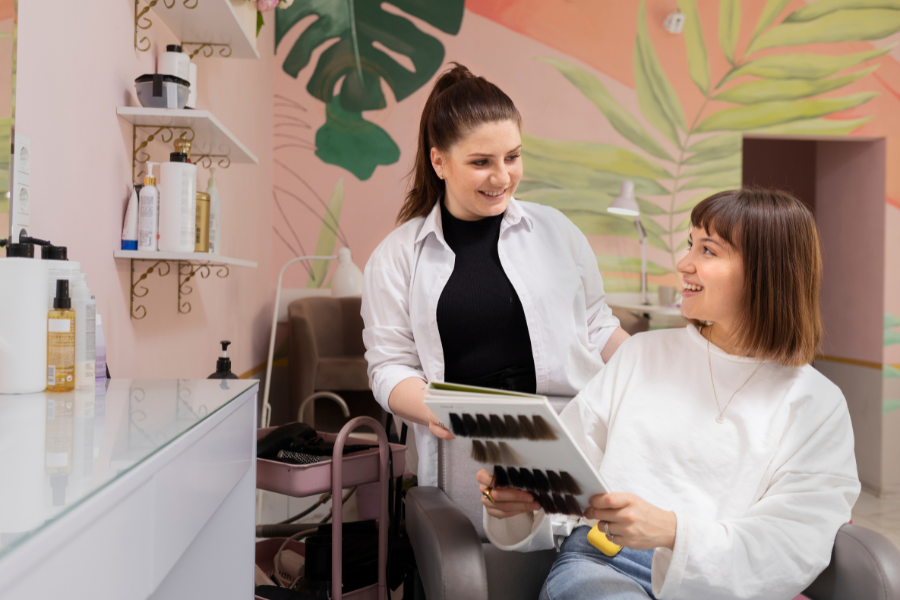
Buying from three colour lines creates dead stock. One complete system is easier to manage. It can also unlock bigger volume discounts. List your top 10 services by revenue. Then buy only what those services need.
5. Test Their Reliability
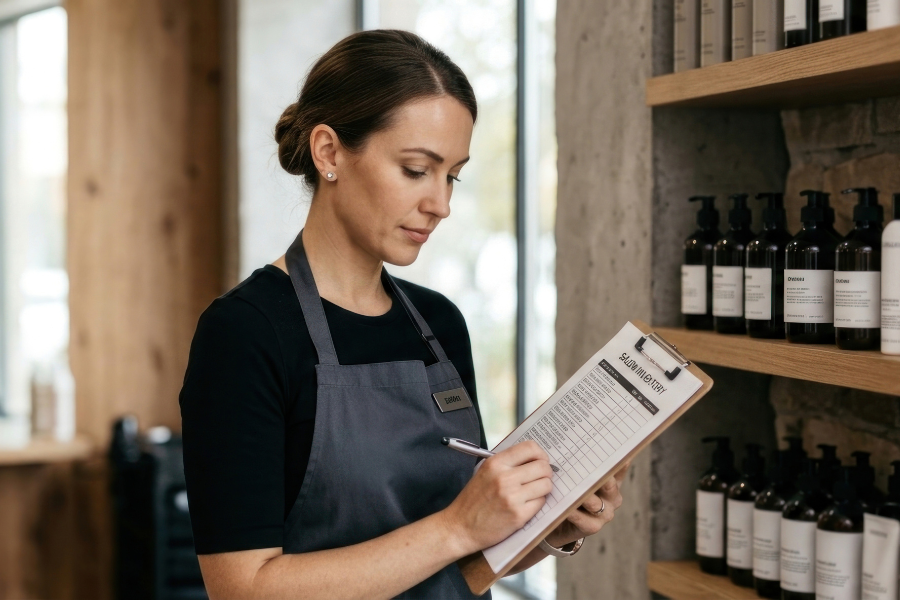
Ask about lead times and fill rates. A seven-day lead time means holding about twice the safety stock of a three-day one. Also ask how they handle damaged deliveries. Find out who your account contact will be.
How to Control Back-Bar Costs
Once you pick a supplier, watch your costs. Back-bar spending should stay between 8% and 12% of service revenue. If it climbs above 15%, something is wrong.
The usual cause is waste. Many salons lose 20% to 30% of product through guesswork and spills. Measuring tools and clear mixing rules fix much of this.
Next, build your opening stock around 90 days of expected services. Do not buy a generic wholesale catalogue. Split your list into high-volume items, such as shampoo, developer and wax. Keep low-volume technical products separate.
Retail helps too. Take-home products can earn 40% to 50% gross margin, versus about 30% on services. Aim for retail to make up 15% to 30% of turnover. Clients who buy home-care products also tend to return more often.
Where to Meet Suppliers
Trade shows are a fast way to compare suppliers. Professional Beauty India in Delhi and Hair & Beauty Show India (HBS India) let you test products. You can also meet brand teams face to face.
Salon chains offer another lesson. Naturals, Lakmé Salon, Green Trends, Looks and Geetanjali standardise buying and training across outlets. Independent owners can copy this by using fewer, better suppliers.
FAQs
How do I know if a salon product distributor is authorized?
Ask for a Letter of Authorization from the brand. Then check the legal markings on the packs.
What is a healthy back-bar cost?
Aim for 8% to 12% of service revenue. Review waste if you pass 15%.
Why not buy only from wholesale markets?
Prices may be lower. But the risk of fake or expired stock is higher. You also get no training or brand support.
Conclusion: Choose a Partner, Not Just a Price
The best salon product distributors in India offer genuine stock, training, steady supply and clear paperwork. Price matters, but it should never be the only factor.
Follow these steps:
- Calculate your current back-bar cost per service.
- Shortlist two or three authorized salon product distributors.
- Request Letters of Authorization and check packaging markings.
- Run a 30-day trial on core services before signing a full contract.