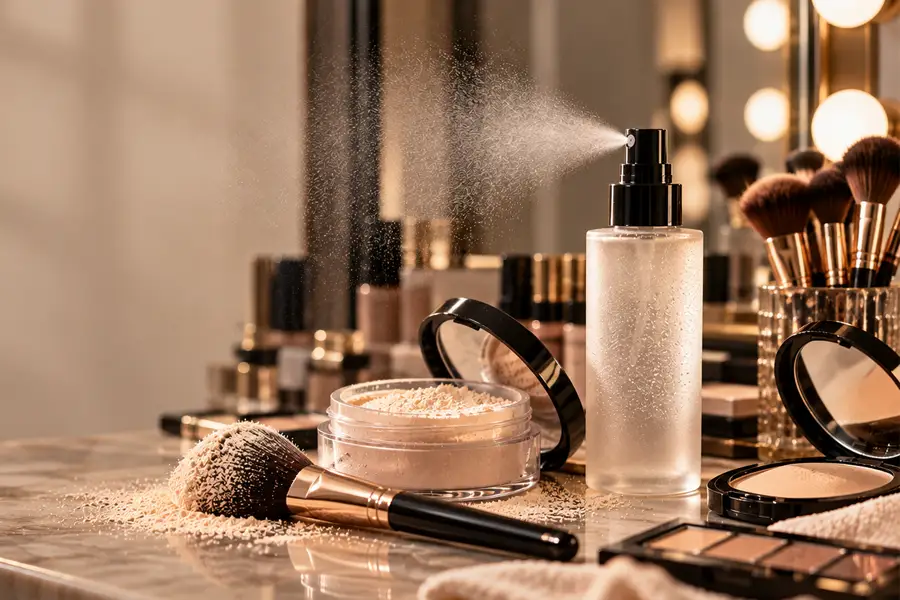

From choosing the right formula for different skin types to creating a long-lasting base, here’s what makeup artists need to know about these setting essentials.
A flawless base is one thing; keeping it intact through hours of wear, changing light and humid conditions is another. For makeup artists, choosing between setting spray and setting powder isn’t simply a matter of preference. It depends on the client’s skin, the desired finish and the demands of the occasion. Here are five questions to consider.
- What is the difference between setting spray and setting powder?
Setting powder is a fine powder which helps set liquid and cream face products while absorbing excess oil. Setting spray is a fine mist which helps set makeup and resist it’s fading and smudging, with some formulas also softening a powdery make-up and adding luminosity.
- Which works best for different skin types?
For oily skin, a setting powder can help control shine, especially around the T-zone. On dry skin, setting powder should be sparingly used to avoid emphasising dry patches. Consider using a hydrating setting/finish spray. For combination skin, apply the setting powder selectively to oilier areas.
- What types of setting spray should you know?
- Natural-finish sprays maintain a more skin-like appearance
- Matte sprays help manage shine
- Dewy formulas add radiance
Choose according to the client’s skin, the makeup look and the occasion.
- Which setting powder should you choose?
- Loose powder works well for setting the base
- Pressed powder is practical for touch-ups
- Translucent formulas add minimal colour
- Tinted powders provide additional coverage.
Apply strategically to avoid a heavy finish.
- Could you use both together?
Yes; while Setting Powders can set the base and control oil, Setting Sprays helps improve wear. For bridal and occasion makeup, combining them strategically can support a longer-lasting finish, particularly in humid conditions.
The takeaway: Neither product replaces the other. Knowing when, where and how much to apply helps makeup artists create a finish tailored to each client.