
Gen Z, Micro-Markets, and Margin Pressures dominate Indian Salon Industry Trends and will define the pulse of India’s hair and beauty culture.
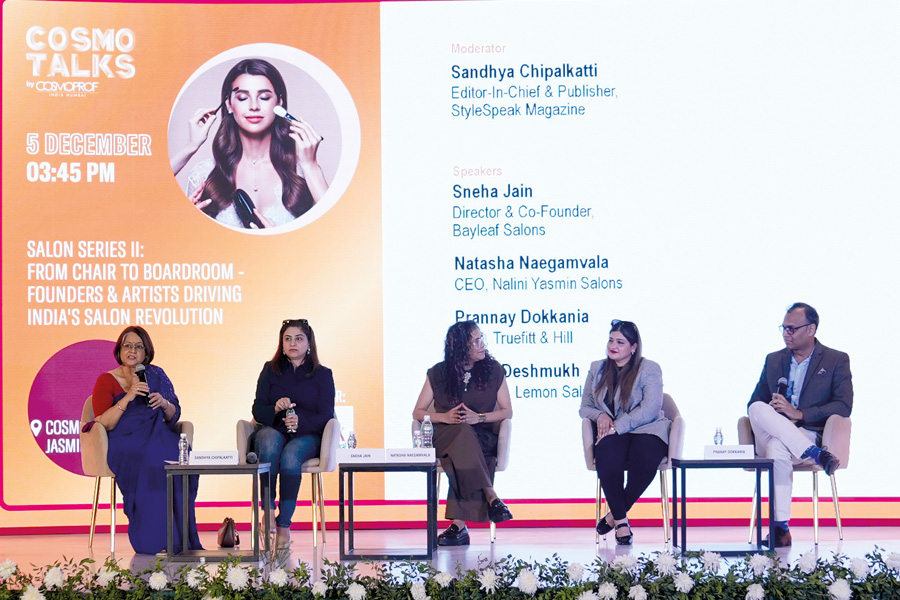
India’s salon sector is transforming rapidly in the hands of dynamic entrepreneurs, big and small, to offer superlative customised experiences driven by systems, strategy, and cultural relevance, revealed industry leaders, at the recently concluded Cosmotalks at Cosmoprof India 2025 in Mumbai.
The discussion featured salon entrepreneurs successfully running various revenue models, weighing in on systems, service quality, and evolving consumer trends. Prannay Dokkania— Chief Operating Officer at Truefitt & Hill International: Men’s only, corporate, franchise chain (40+salons): Sneha Jain—Co-founder, Bayleaf: A women’s exclusive salon, founded and run by women (11 stores in Mumbai), Qurat Deshmukh—Founder of the unisex Lemon Salons (12 doors in Mumbai) and Natasha Naegamvala— a 2nd generation artist, leading Nalini of Nalini & Yasmin Salon: a single door Unisex salon. Moderated by Sandhya Chipalkatti, Editor in Chief of StyleSpeak magazine, the session highlighted how each combines business strategy and creative artistry to drive the Rs 15,000 crore organised salon market.
Building brands that resonate with modern consumers
Speaking of building salon brands which resonate with modern consumers, especially in terms of services, Dokkania emphasized the importance of finding the right franchise partner and local talent for growth. Prioritising the role of quality services, he warned, “If garbage goes in, garbage comes out.”
Jain of Bay Leaf Salons championed the company-owned, company-operated (COCO) approach for scaling without quality loss. “We are value for money, but quality is non-negotiable,” she said. Strict SOPs and ongoing training beyond technical skills position Bay Leaf for future franchising. Deshmukh explained how Lemon Salons’ structured training—including induction, assessments, and etiquette—is a creativity enabler.
On the other hand, Gen Z is highly informed, comes with AI-generated looks and high expectations, pushing salons to evolve. Naegamvala added that clients of all ages now demand trendy, research-backed services.
Naegamvala highlighted stylists’ multifaceted roles as entrepreneurs, influencers, and mentors. She noted creative artists’ struggles with operations and numbers, stressing the importance of strong teams. “All the creative owners obviously have to tackle the same issue”, and affirmed, “if creativity didn’t exist, salons wouldn’t exist”.
Changing consumer choices, diverse trends across India
Speaking of how regional diversity shapes India’s salon trends/ needs, Dokkania outlined diverse behaviour pan-India: socially flamboyant – North, global – West, disciplined – South, and Gen Z – East. Micro-markets persist even within cities, e.g. Mumbai’s suburbs, Bandra versus Borivali. Jain described that for a modern woman today, it’s not just about external looks; it is also about self-care and how she feels inside.
Gen Z arrives informed with AI-generated looks and high expectations, pushing salons to evolve. Naegamvala added that clients of all ages now demand trendy, research-backed services. Naegamvala urged standalone artists: “Don’t rest on your laurels.” Build young teams, embrace learning, and stay humble to avoid stagnation.
The panel concluded that adaptability trumps challenges like retention and competition, merging artistry with business for India’s beauty future.